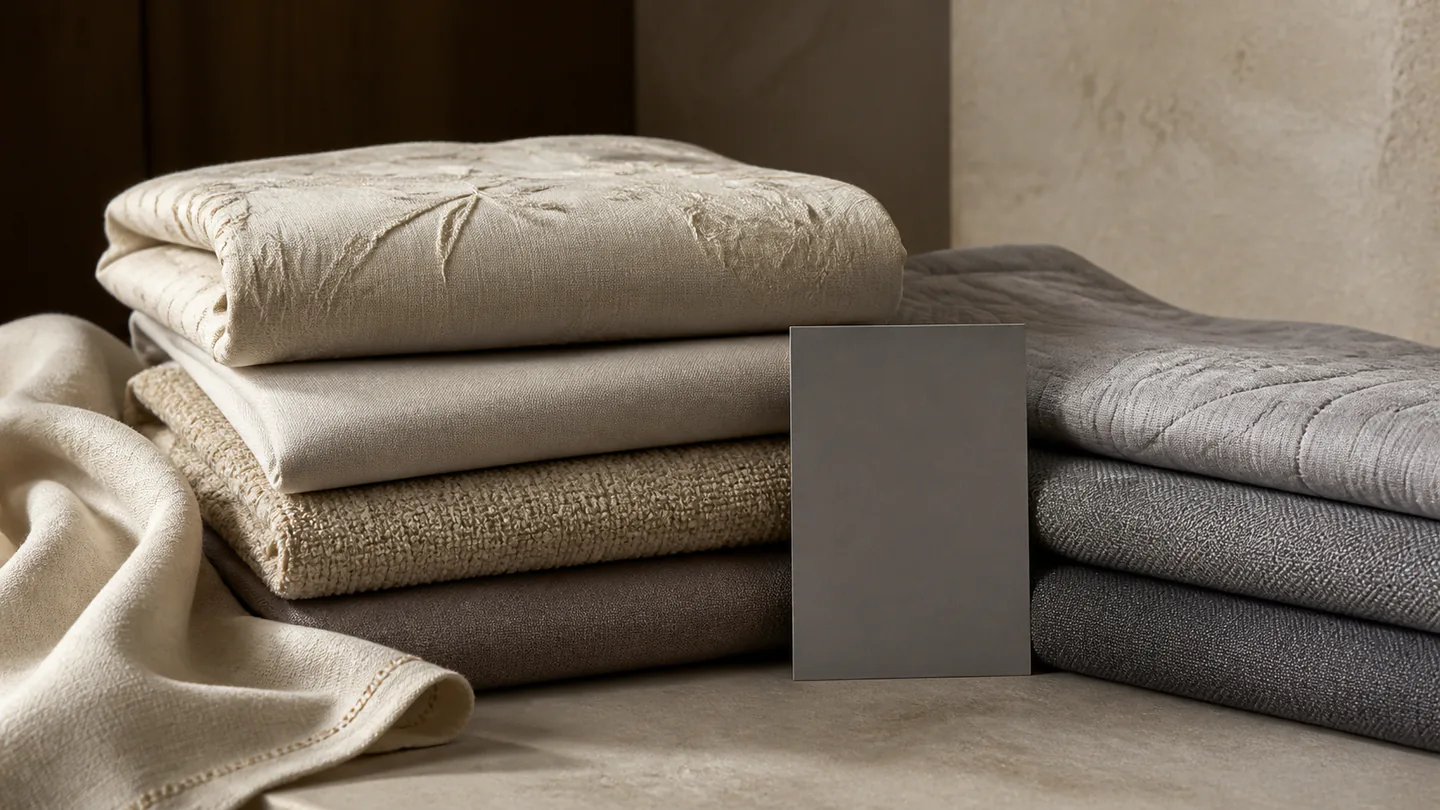
Summer quilts and lightweight quilts sold for air-conditioned rooms can differ in pattern, quilting, binding, reverse side and folded bulk. Do not simply borrow a winter-duvet approach that emphasizes volume.
Start with the full pattern, both sides and the lighter silhouette. A natural bed arrangement can show drape and folds, while close-ups explain visible quilting, binding and surface texture.
Start with the product: Summer quilts and lightweight bedding
Start with the full pattern, both sides and the lighter silhouette. A natural bed arrangement can show drape and folds, while close-ups explain visible quilting, binding and surface texture.
Identify the actual sale item, product name, style code and intended page position before choosing white-background, flat lay, room or detail views. Base the shot count on product differences and information needs rather than copying a standard package.
Give each image a specific job
One image rarely explains shape, construction and use equally well. Separate the shots by task so the team can check each requirement during capture and delivery review.
| Image task | What it should explain | What to check |
|---|---|---|
| Fully opened view | Complete pattern, outline and both sides | Keep the pattern intact and match the sample color |
| Natural arrangement | Lightweight form and drape | Do not manufacture a thick or heavy appearance |
| Folded view | Folded shape and visible layers | Do not substitute apparent bulk for dimensions or weight |
| Quilting and binding | Stitches, edges and local construction | Describe only what is visible on the sample |
Build a visible-evidence matrix for the exact sample
Capture every row against one identified sample and record the setup in the shot log. The resulting frames document appearance under that setup; approved product records still supply dimensions, composition, fill information and performance statements.
| Evidence frame | What the frame can document | Claim boundary |
|---|---|---|
| Open profile: front and reverse | Complete outline, pattern direction, reverse-side relationship and the sample's visible profile | Does not establish weight, filling, cooling or thermal performance |
| Natural drape | How the identified sample falls and folds on the documented setup | Does not prove softness, breathability, cooling or comfort outcomes |
| Fold and edge | Visible layers, edge profile, binding and the shape of a natural fold | Does not replace approved dimensions, weight or thickness information |
| Quilting and binding | Visible stitch paths, local construction and edge finish | Does not establish internal fill composition, seam durability or wash performance |
| Packaging and compression | The supplied package, packing arrangement and compressed state at the time photographed | Does not prove recovery, lasting loft, storage life or performance after unpacking |
Confirm the product information before shooting
Images must match the real sample, style code and approved product information. Ask the brand to supply and approve dimensions, fiber content, filling, weight, functions, certifications, care and intended-use statements. Do not infer them from the photograph.
Cooling, breathability, antibacterial performance, machine-washability and recovery after compression cannot be established from the image alone. Use approved information or relevant evidence for the actual product.
- Actual summer-quilt product name
- Front, reverse and pattern direction
- Approved dimensions and fill information
- Important quilting and binding details
- Main-image, product-page and scene uses
Connect main images, details and use scenes
A main image establishes product identity. Product-page images can add construction, close-ups, components and confirmed specifications. Room scenes explain space or use, but do not replace clear views of the sale item. Plan safe crop space for landscape, portrait and square uses before capture.
Old Money Visual is based in the Nantong Haimen home-textile district in Jiangsu, China. Buyers sourcing in China can discuss a sample-based shoot before arranging their overseas inventory shipment separately. Confirm the actual settings, shot count, post-production, timing and usage scope for the project.