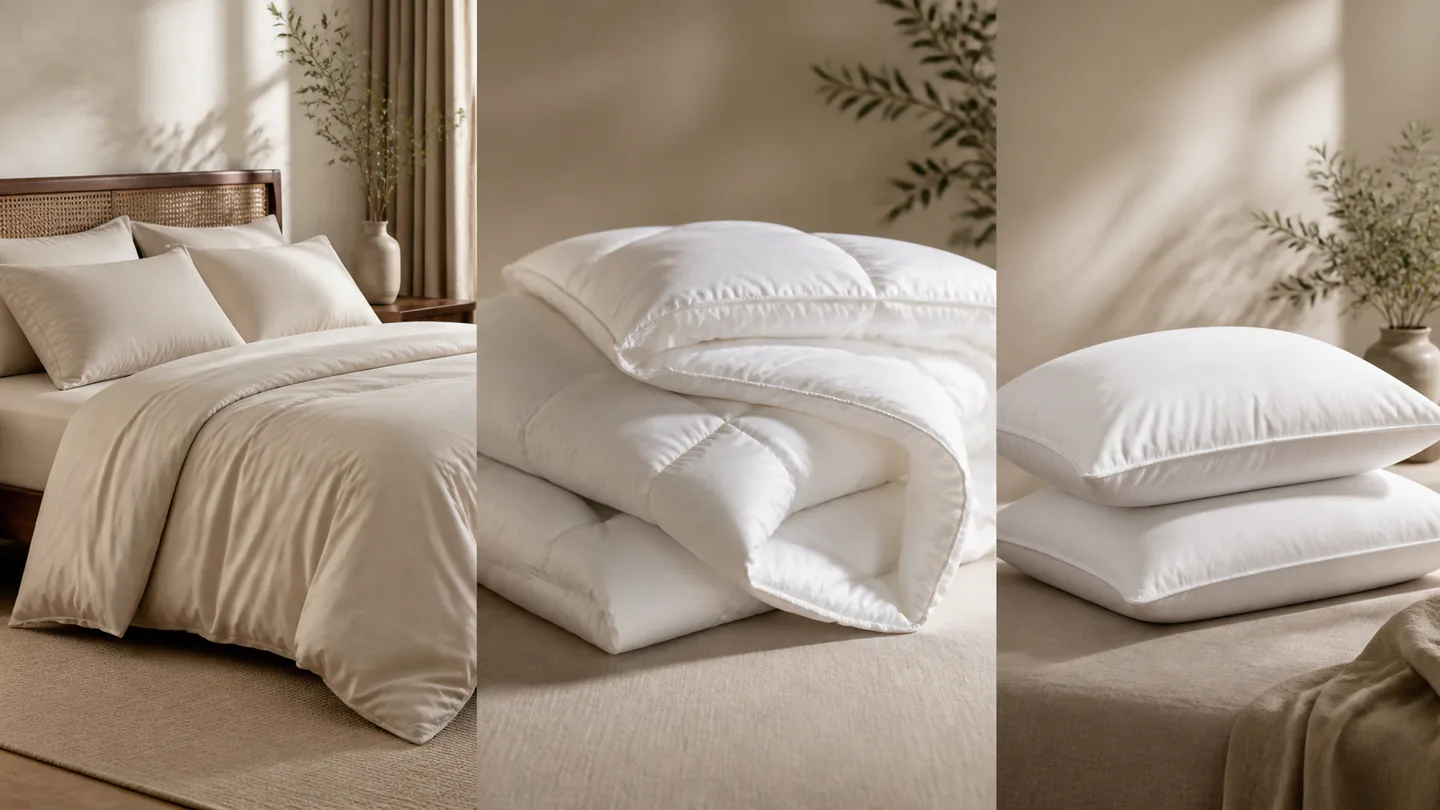
Large, pale duvets can be difficult to photograph while retaining the full outline, natural volume, quilting and edges. A room scene may hide the item itself; a white-background full view may leave out use and construction detail.
Separate identity, form, structure, details and context. Duvet covers belong with bedding components in these guides, while filling, warmth, fabric weight, dimensions, fiber and test information require approved product facts.
Use the final sales name for the specific duvet insert or standalone quilt. Do not mix its contents and specifications with those of a cover or a complete bedding set.
Identify the complete item before explaining its form
An open view establishes the outline and quilting distribution. A natural arrangement or fold explains visible volume and drape. Edge and local close-ups explain stitching, binding, corners, labels and confirmed construction.
Use the brand’s actual sales terminology, since duvet and quilt naming can vary. A duvet cover needs its own component and pattern checks; its product facts should not be merged with those of the insert.
| Image task | What it explains | Confirm before shooting |
|---|---|---|
| Complete open view | Outline, visible scale and quilting layout | Sale name, dimensions and both sides |
| Arrangement or fold | Natural volume, drape and product state | Permitted preparation and intended use |
| Edges and corners | Binding, stitching, fixing points and actual construction | Feature names and style code |
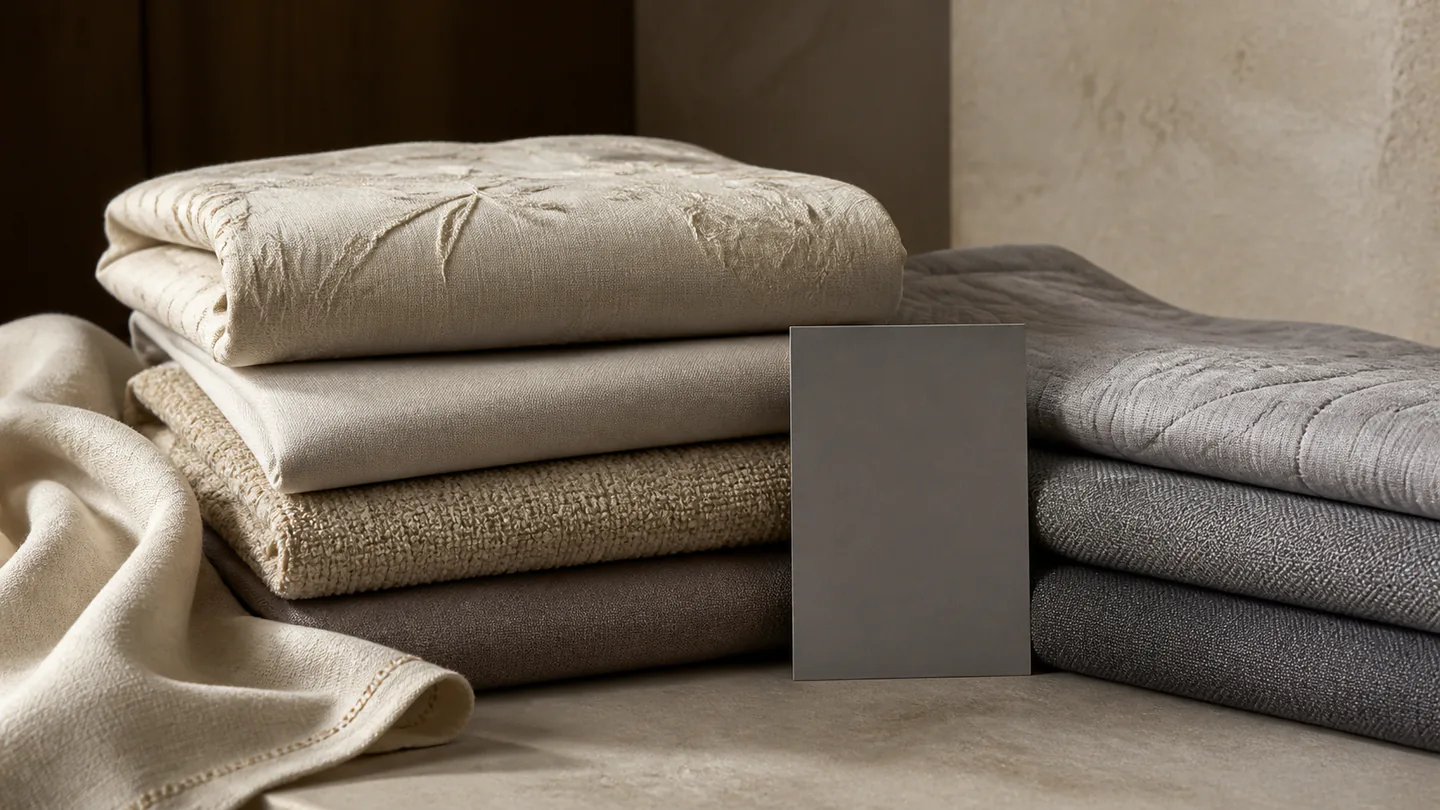
| Fabric and label | Surface texture and actual label information | Material, specifications and whether the label is needed |
| Bed grouping | Scale beside the bed, pillows and room | Bed type, styling and required crops |
Use open, arranged and folded views for different questions
Preserve all four edges, corners and the overall quilting in the complete view. A bed arrangement shows coverage and use. A natural fold or hanging section shows surface form and visible bulk. Each view can answer its own question without crowding one composition.
Keep the sample’s state truthful. Hidden supports, excess filling or digital stretching can imply a thicker or larger product. Confirm recovery and waiting conditions for compressed samples and retain a record of the state at capture.
- All edges and corners visible
- Overall quilting distribution shown
- Arrangement does not conceal the item
- Natural folds
- Pale edges separated from the background
- Sample state recorded
Retain quilting and edges on a pale duvet
Light-colored products can lose their outline against bright backgrounds. Keep a clean impression while preserving separation and surface relief. A full view needs readable seams, corners and quilting; dedicated close-ups can explain fabric, binding, fixing points and labels.
Color and tonal work should stay within product fidelity and the agreed direction. Do not invent relief with heavy shadows or erase real structure. Match every detail file to its style so a shared setup does not cause labels or quilting to be assigned to the wrong item.
Keep loft and performance claims distinct
A photograph records the visible contour, fold and surface at capture. It cannot independently establish fill type or quantity, fabric weight, warmth grade, breathability or test results. Use product information supplied and approved by the brand.
Do not enlarge volume, add quilting or reshape edges to create an exaggerated impression of loft. If the page compares styles or weights, photograph the corresponding real samples under comparable conditions and check the wording against each.
Prepare a traceable sample and shot list
Record the sale name, style, color, dimensions, front and reverse, quilting and page use. Mark the open, arranged, folded, edge, fabric, label and scene tasks. If styled with a bedding set, distinguish props from the actual sale contents.
Old Money Visual supports sample-based projects. For bulky bedding, confirm carton count, packing condition, receiving time, preparation, handling and return arrangements before dispatch. Bed type, settings, image count, retouching and delivery dates remain project-specific.
- Sale name, style and dimensions
- Front, reverse and quilting structure
- Transport and recovery condition
- Full, folded, detail and scene uses
- Approved material, fill and specification facts
- Clear distinction between props and sale items
- Agreed delivery and return of samples
Sources and further reading
These sources provide context for the claims or channel requirements discussed here. Review current requirements alongside your product information and project agreement.
- MIIT: E-Commerce Law of the People’s Republic of China ↗Chinese official reference on accurate product information. Materials, specifications, components and performance wording must remain tied to the actual product.