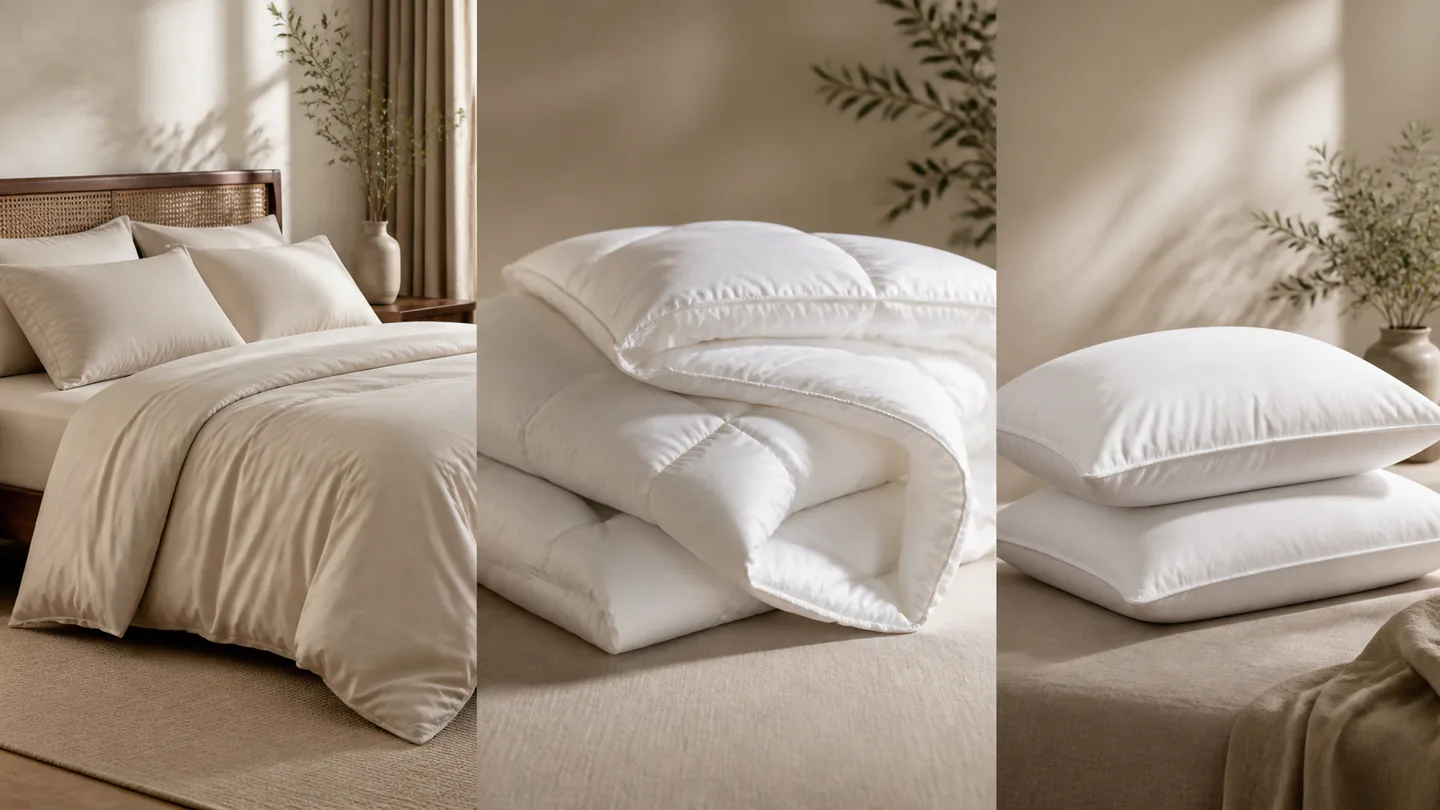
A bedding-set shoot does not end with a neatly made bed. Buyers need to understand the overall palette and pattern, which pieces are included and how they coordinate, followed by fabric, openings, stitching and packaging details.
This is a shot-planning guide from Old Money Visual, not a fixed package. A common four-piece set contains a duvet cover, a sheet or fitted sheet and two pillowcases, but actual quantities and components must be confirmed. Use approved product information for material, construction, dimensions and functions.
Make the set, pattern and sale contents clear
A complete arrangement establishes the set and pattern scale. Individual-piece and detail images then explain the contents. Atmosphere without recognizable products, or isolated details without a clear set relationship, leaves important buyer questions unanswered.
Use the supplier’s actual component list to identify the duvet cover, sheet or fitted sheet and pillowcases. The product name alone does not establish which pieces are included.
In this guide, pillowcases are planned with the bedding components. Finished shaped pillows, memory-foam pillows and decorative cushions have different product tasks and use the separate pillow guide.
| Image task | What it explains | Confirm before shooting |
|---|---|---|
| Complete arrangement | Main colors, pattern scale, set relationship and natural state | Components, bed type, front and reverse, arrangement direction |
| Main listing image | Recognizable product and pattern at a small size | Channel, ratio, crop and text-safe area |
| Individual components | Each cover, sheet or fitted sheet and pillowcase | The actual contents of the sale set |
| Fabric and construction | Texture, stitching, openings, binding and confirmed details | Approved material and construction names |
| Room and content images | Color coordination and use in a space | Brand direction, exclusions and portrait or landscape use |
Establish the whole set before photographing its parts
Check the combination of cover, sheet and pillowcases, the main motif position, front-to-reverse relationship and pillowcase direction. Large patterns need a complete enough view to understand their placement; small repeats need a thumbnail check. Do not move or duplicate a pattern in retouching to improve its apparent placement.
Once the whole is clear, photograph components and local details. Component images establish what is included; close-ups explain weave, seams, openings, binding or approved construction. If a detail belongs only to one color or style, mark that in both the shot list and filename.
If the product includes a fitted sheet or is sold alongside a bed skirt or bedspread, do not reuse a duvet-cover shot list unchanged. Fit, drop, coverage and edge construction create different image requirements. See fitted-sheet, bed-skirt and bedspread photography.
- Complete bed surface and main pattern
- Front and reverse of the duvet cover
- Actual shape of the sheet or fitted sheet
- Pillowcase count and pattern direction
- Fabric texture and stitching
- Openings, binding and confirmed construction
Give main, white-background and room images different roles
A main image needs clear pattern, palette and component relationships at phone-thumbnail size. White or restrained backgrounds help explain components, outline and color; room scenes establish space and coordination. Keep the visual direction connected without forcing all information into one image.
Plan landscape, portrait and square versions from the intended page. Leave title space where needed, while keeping a complete-bed view intact. Confirm the actual ratios and output specifications for each destination.
- Main image: clear at a small size
- White background: legible components and outlines
- Room scene: believable spatial relationship
- Portrait and landscape: essential edges remain intact
- Text-bearing image: usable title space
- Mobile view: the product stays prominent
Prepare product facts as carefully as references
Connect the sample, page position and information required. Supply codes, colors, components, dimensions and approved material and construction facts, marking unresolved points clearly. The shoot brief can then align full views, components, details and scenes to the same inventory.
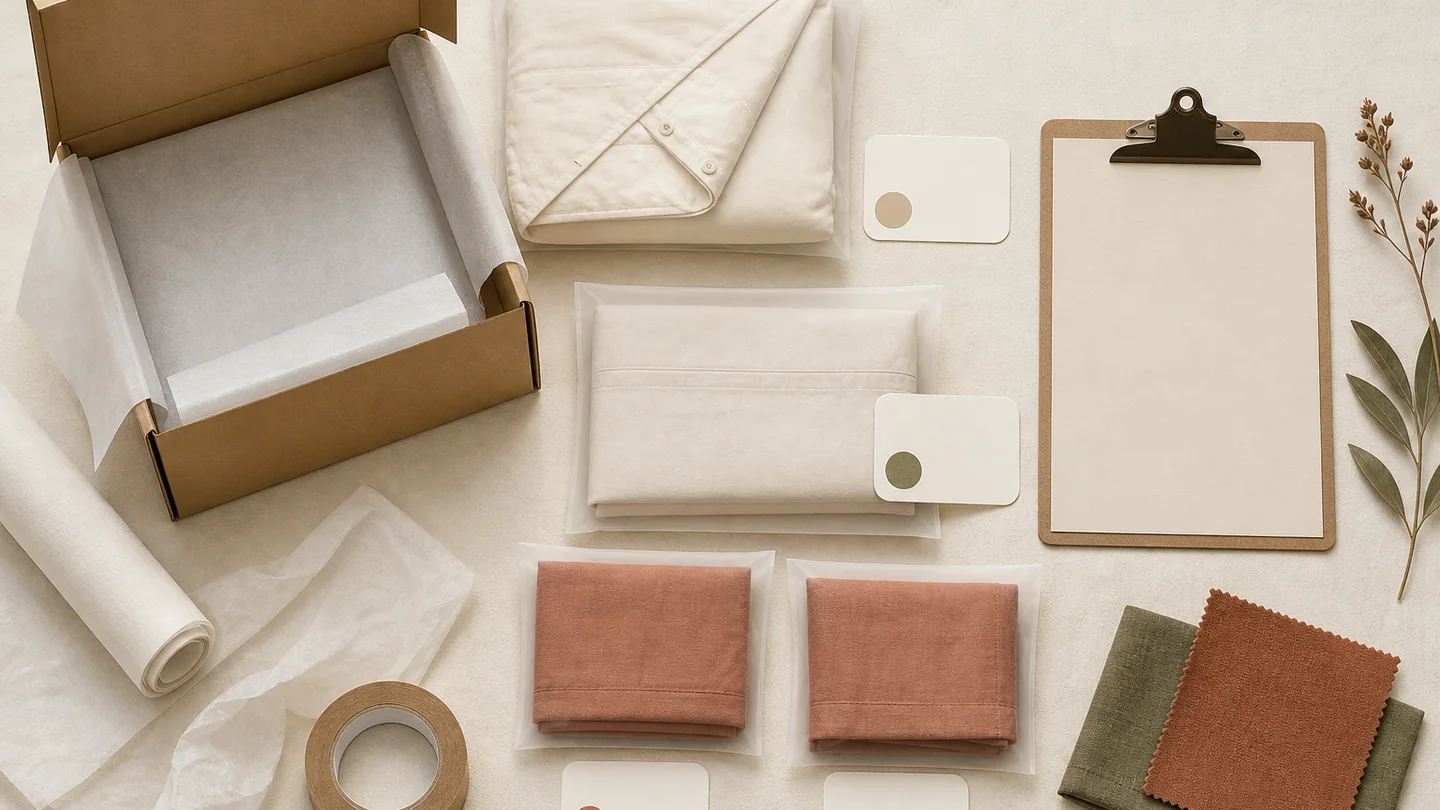
For samples sent to Nantong, check carton contents, completeness and preparation needs, including any permitted steaming or arranging. Confirm the receiving address, timing, box count, handling and return arrangements before dispatch. Sample photography does not establish a universal shipping policy.
- Style, color and component inventory
- Dimensions and bed type
- Approved material and construction names
- Listing, detail-page, content and catalog uses
- Landscape, portrait, square and title positions
- References and directions to avoid
- Agreed sample delivery and return arrangements
Keep the product facts separate from the visual effect
Images show the appearance, construction and state that were photographed. Light, a model’s actions or retouching cannot establish skin-related, antibacterial, temperature-control or other functional benefits. Use approved information for materials, dimensions, standards and care.
Cleanup, color correction and agreed layout work should preserve the real item. Do not invent patterns, components or construction. Before publishing, check images alongside titles, specifications and set descriptions so the apparent contents match the sale.
Put this guide into a production plan
Confirm the actual scope from your samples, channels and accuracy requirements; these services are not automatically bundled.
Sources and further reading
These sources provide context for the claims or channel requirements discussed here. Review current requirements alongside your product information and project agreement.
- MIIT: E-Commerce Law of the People’s Republic of China ↗Chinese official reference on accurate product information. Actual set contents, materials, functions and specifications remain subject to the brand’s approved facts.