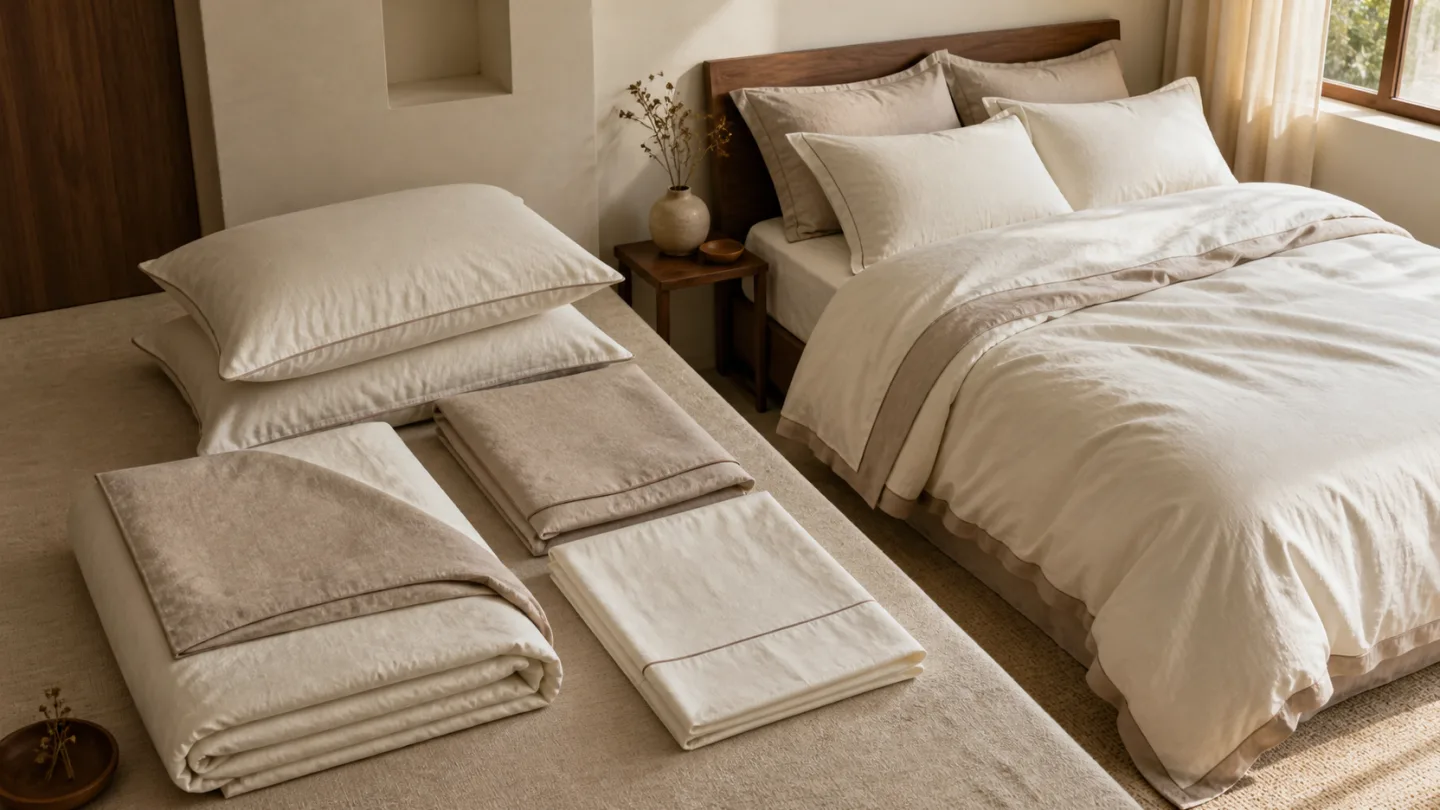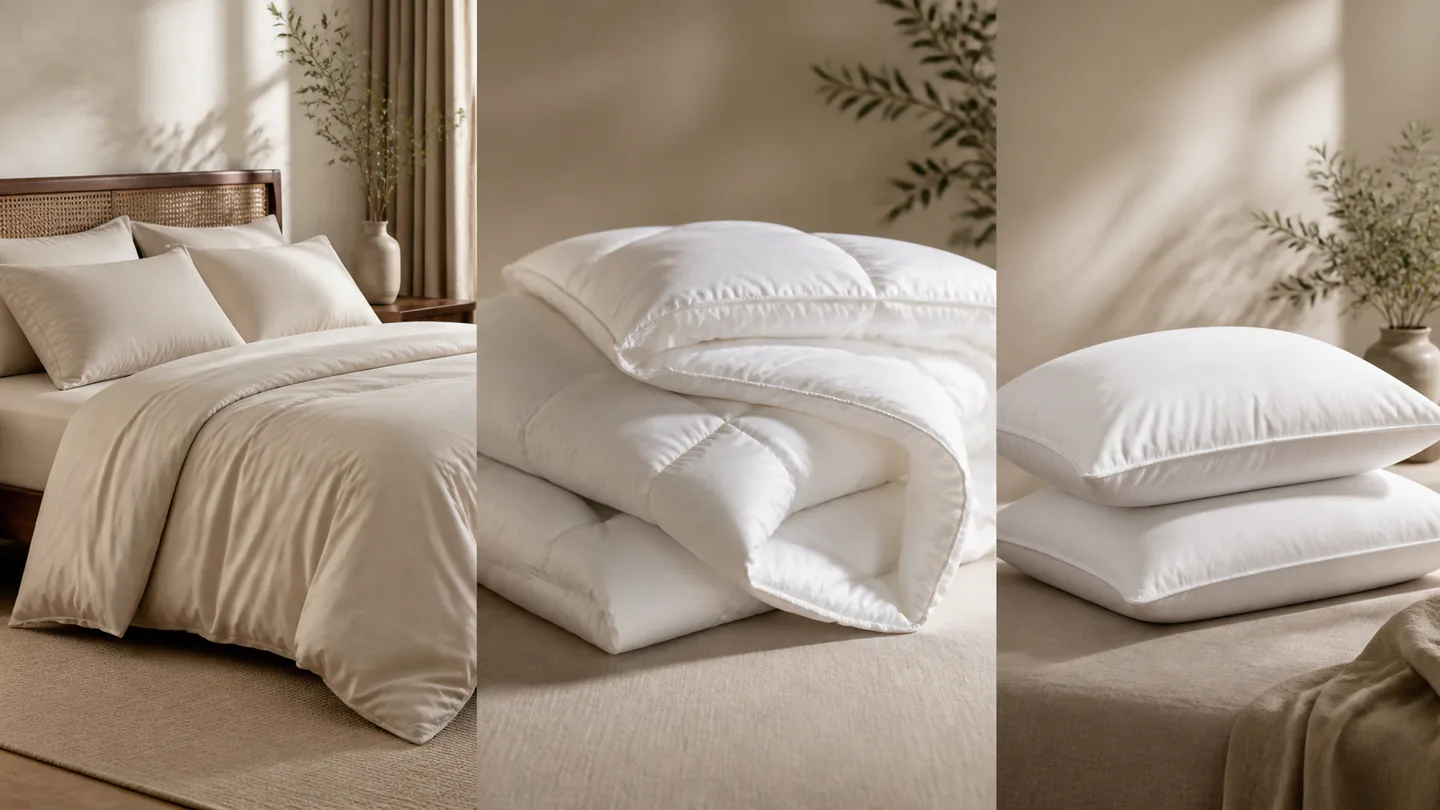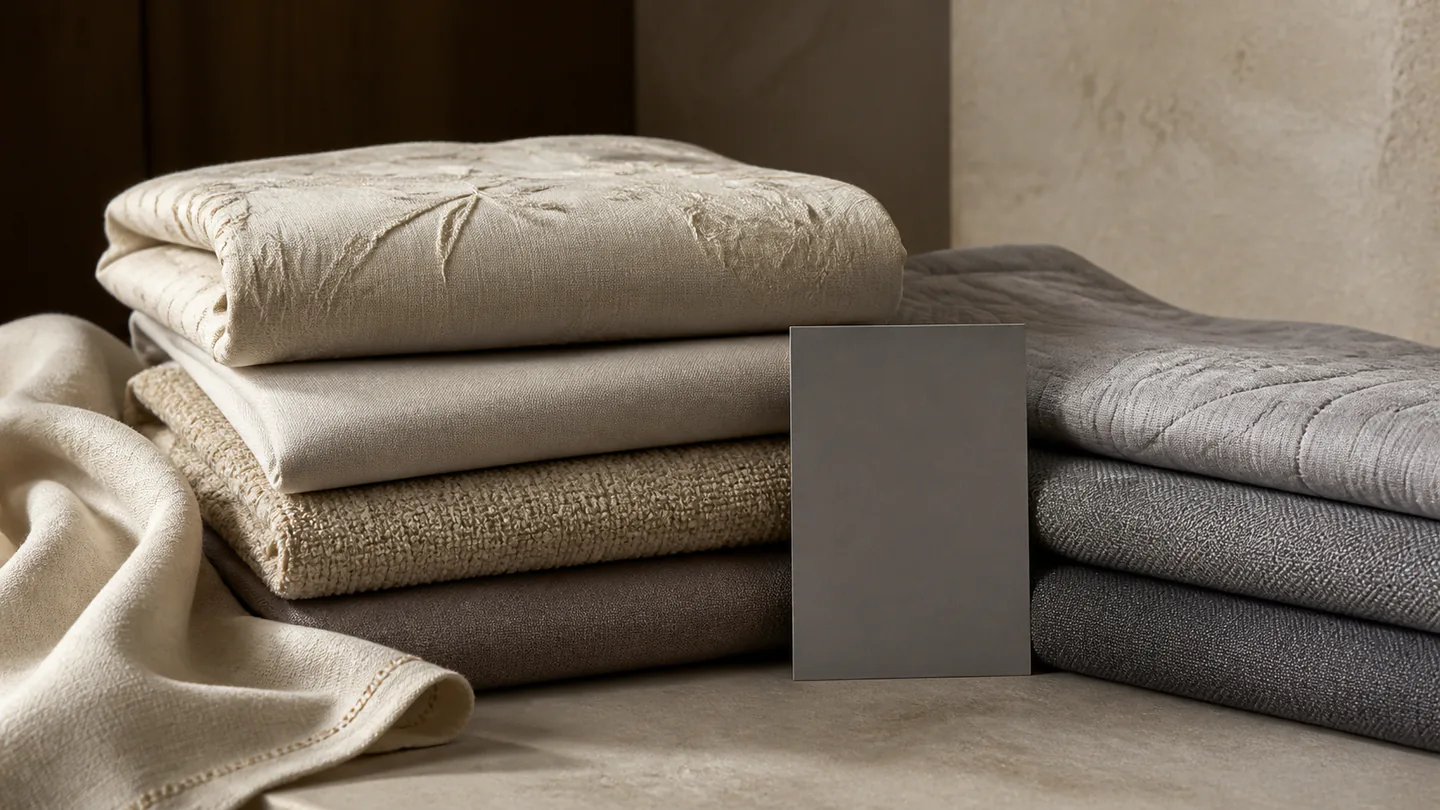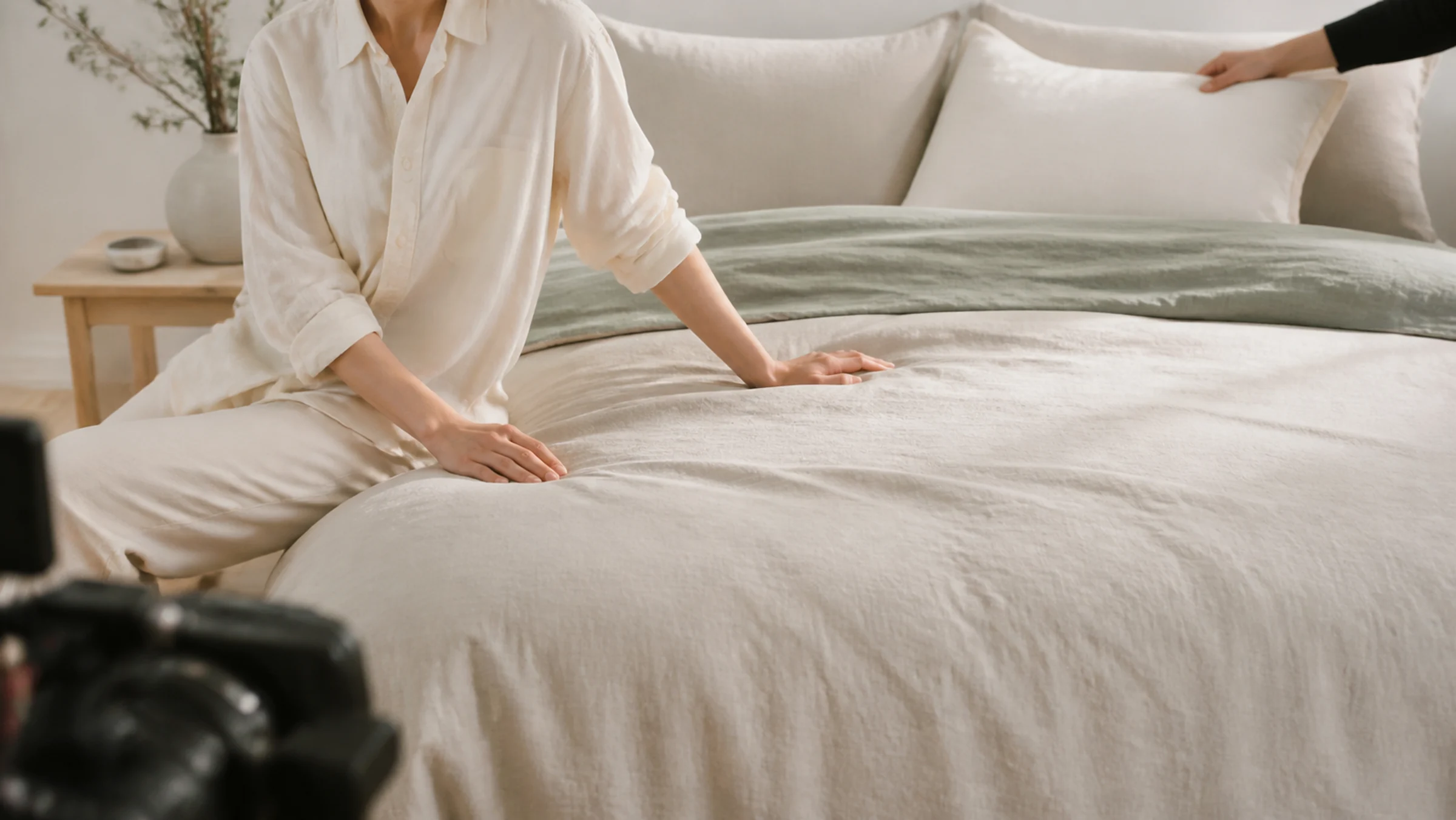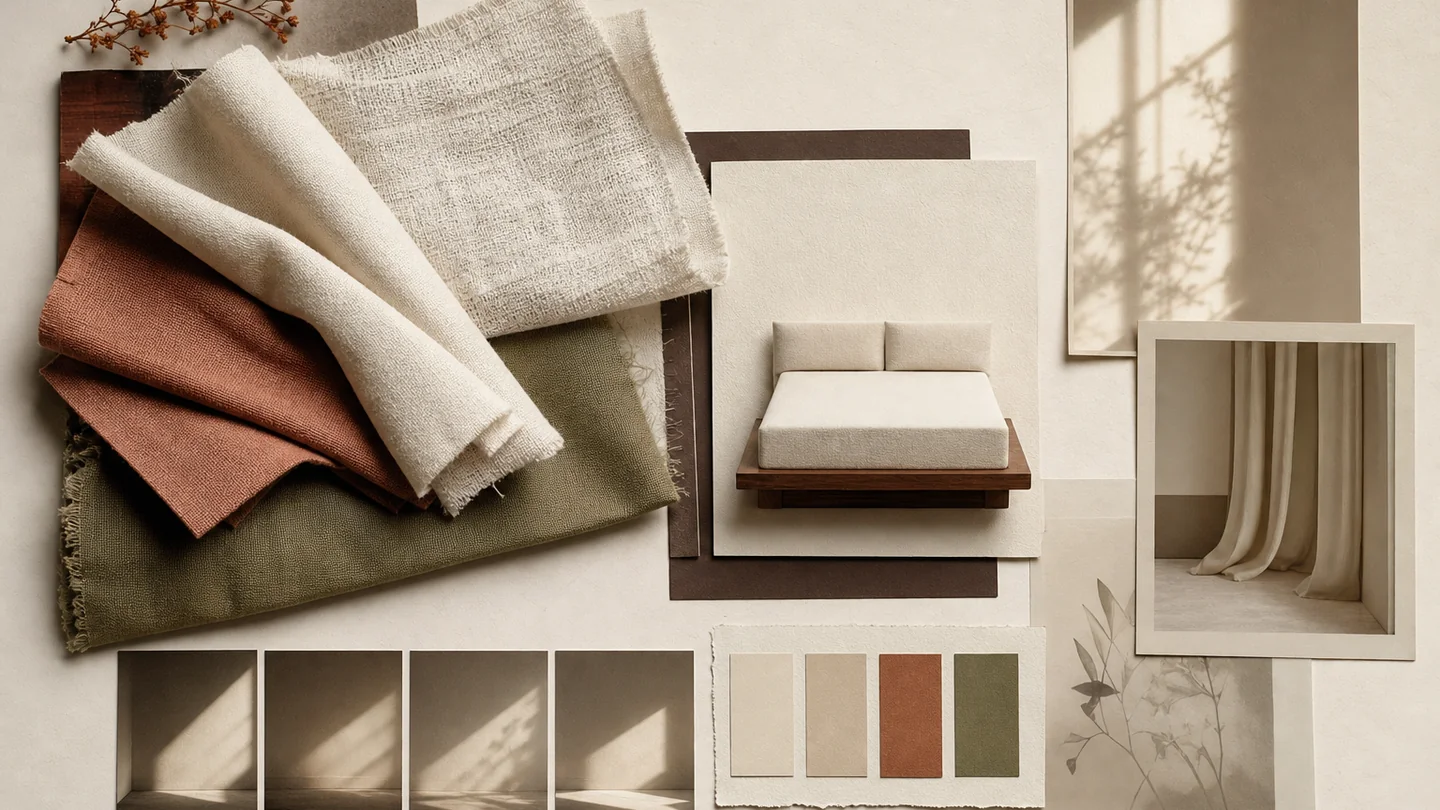
Start with the product, image task and intended channel, then choose the setting. Starting with an attractive bedroom can leave you trying to fit the bedding into a scene that hides its strengths. Pattern scale, color, visual density and the details that matter all affect the background.
This is a planning framework, not a fixed style package or a list of available studio sets. Confirm the setting, props, lighting and shots against the actual samples.
Give the setting one primary job
A bedding image may need to identify the product, explain the pattern, suggest use in a room or establish a collection identity. Choose the main job first; it determines how much environment, styling and empty space the image needs.
A beautiful room does not solve a product image if the bedding becomes unclear at thumbnail size or blends into the background.
- The bedding is the first recognizable subject
- Pattern, edges and set relationships remain clear
- Background colors provide enough separation
- Props help explain the scene
- Composition allows the required crop and text
- The setting fits the intended channel
Match the amount of styling to the product
Large motifs, strong contrasts and decorative details already carry substantial visual information. Reduce competing colors and small props around them. Plain or subtle bedding may benefit from stronger light, material contrasts and spatial depth.
Consider sheen, texture and drape as well as overall color. A room that looks good in a wide shot must also support the close-ups you need. Fabric and performance wording must come from approved product information.
Decide how much room the channel needs to show
A listing image needs fast recognition; too much room can reduce the product to a small shape. A product-page scene can explain use and atmosphere. Social content may support a stronger narrative, with portrait or landscape framing and room for text.
One set can support several compositions, but one photograph is not automatically suitable everywhere. Check placement, aspect ratio, text requirements and recognition on a phone before shooting.
- Listing image: recognizable silhouette, pattern and product scale
- Product page: room context, detail and reading sequence
- Social content: portrait framing, actions and title space
- Catalog or trade presentation: collection consistency and page pairing
- Video cover: immediate recognition and continuity with the footage
Choose a setting direction for the question it answers
A restrained product setting uses limited colors and props to explain appearance, pattern and components. A lived-in setting may add lamps, books or everyday actions to suggest use. A brand-oriented setting places more emphasis on light, composition and atmosphere.
These are different purposes, not quality levels or guaranteed studio options. Ask what the buyer needs to understand before deciding how strongly the surroundings should participate.
Use background, props and light to separate the layers
Strong contrast is not always necessary, but avoid broad areas of color or pattern merging with the bedding. Keep prop size, number and position subordinate to the product, especially around edges, embroidery and other required details.
Test the actual sample to assess color, highlights, tonal separation and pattern density. The result may call for a different background, bed base, prop arrangement or camera position.
For a textile with directional sheen, check the intended room composition and a closer product view before accepting the setting. If moving the camera turns a readable surface into a broad highlight, identify whether camera position, light direction or the sample arrangement needs to change. Keep the approved product color reference separate from the desired room atmosphere; do not solve a scene mismatch by recoloring the textile. Record the accepted viewing direction so later close-ups remain visually related. If one setup cannot support both tasks, scope a separate detail setup rather than treating the room approval as approval of every view.
Check the setting against the shot list
Confirm that the selected setup can produce the complete product view, room view, pattern details, fabric texture, construction details, set grouping and required crops. Arrange a simpler background or dedicated close-up setup for information that cannot be shown clearly in the room.
A scene does not have to carry every specification. Dividing the information between images is usually clearer than asking one photograph to explain atmosphere, detail, size and every selling point.
- Full-product and room views
- Landscape, portrait and text-safe compositions
- Pattern and color relationships
- Fabric and construction details
- Set contents and arrangement
- Separate clean-background shots if needed
- Color and composition checks at test-shot approval
Put this guide into a production plan
Confirm the actual scope from your samples, channels and accuracy requirements; these services are not automatically bundled.