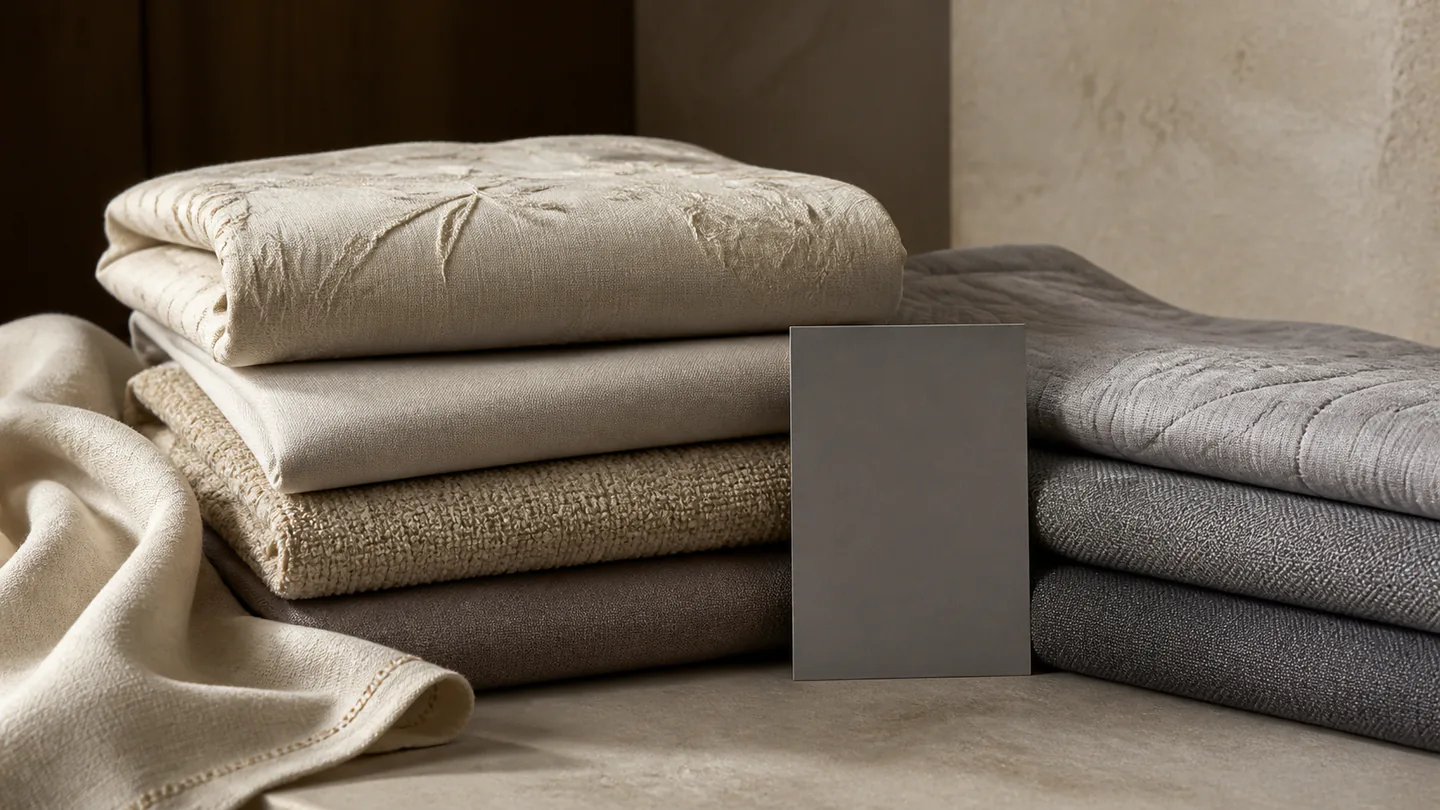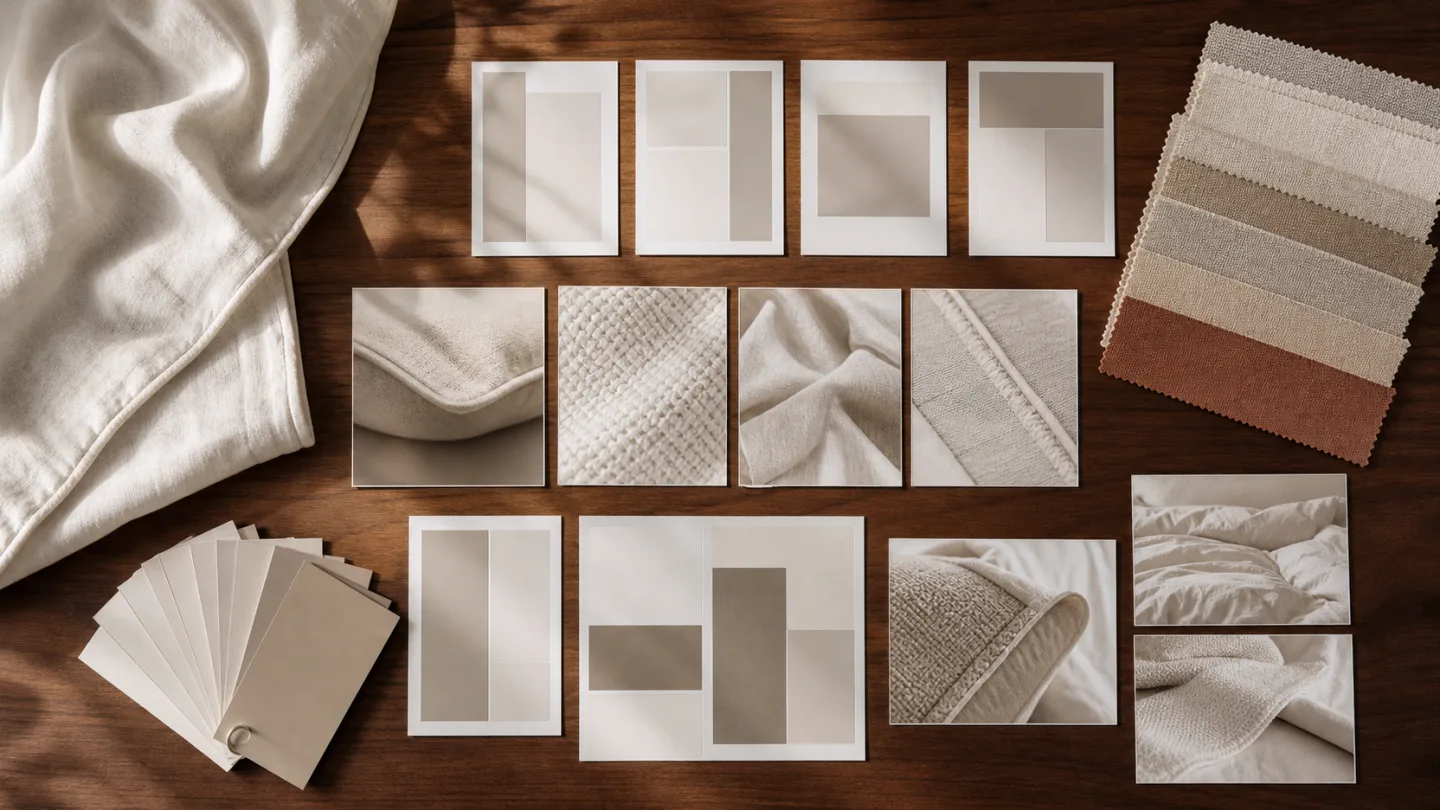
A textile product page commonly needs seven kinds of information: an opening image, a complete product view, use context, material and construction detail, close-ups, set contents and specifications. Select what the product and channel require rather than copying a fixed sequence.
For buyers sourcing in China, planning the page before sending samples to a Nantong studio helps identify missing component or detail views while those samples are available.
Organize the images around the buying decision
The usual information groups are recognition, complete appearance, use, material and construction, details, components and specifications. Not every listing needs a separate image for every group; adapt the plan to approved product facts, the channel and the agreed scope.
Review the page structure beside the shot list before production. A strong atmosphere cannot compensate for an absent component view or an unclear construction detail.
- Opening product image
- Complete product view
- Use and room context
- Fabric texture
- Construction and close-ups
- Exact set contents
- Dimensions, specifications and instructions
Make the product recognizable in the opening view
The first screen should quickly explain what is being sold, what it looks like and the visual direction of the page. A room scene, full-product view or grouping can serve this role depending on the product and placement.
If a heading or feature text is planned, allow space at capture rather than cutting into the product later. Check the image at the size buyers will see on a phone.
Use the middle of the page to explain fabric and construction
Online shoppers cannot touch the textile. Appropriate close-ups can show visible texture, sheen, thickness, embroidery, jacquard, stitching and edges. Fiber and functional wording alongside those images must come from approved product information.
Use scenes explain how the product sits in a room; details explain the object itself. Keep the two roles distinct enough that each image adds information.
Confirm components, specifications and production boundaries
Set contents, dimensions, available colors, packaging and care instructions belong in the information plan, but not all of them require photography. Decide which facts need real images and which need a diagram, layout or supplied specification sheet.
Agree page length, image count, source-file delivery, revisions and adaptations for each channel. A general checklist does not establish a standard package or guarantee platform approval.
Put this guide into a production plan
Confirm the actual scope from your samples, channels and accuracy requirements; these services are not automatically bundled.
Sources and further reading
These sources provide context for the claims or channel requirements discussed here. Review current requirements alongside your product information and project agreement.
- MIIT: E-Commerce Law of the People’s Republic of China ↗Chinese official legal reference concerning accurate product and service information. Use it as context for China-market content; confirm the current rules applicable to the actual sales market.
- SAMR: Advertising Law of the People’s Republic of China ↗Chinese official legal reference concerning clear and accurate product representations. Images are not evidence for unverified specifications or performance claims; review requirements for the relevant market.