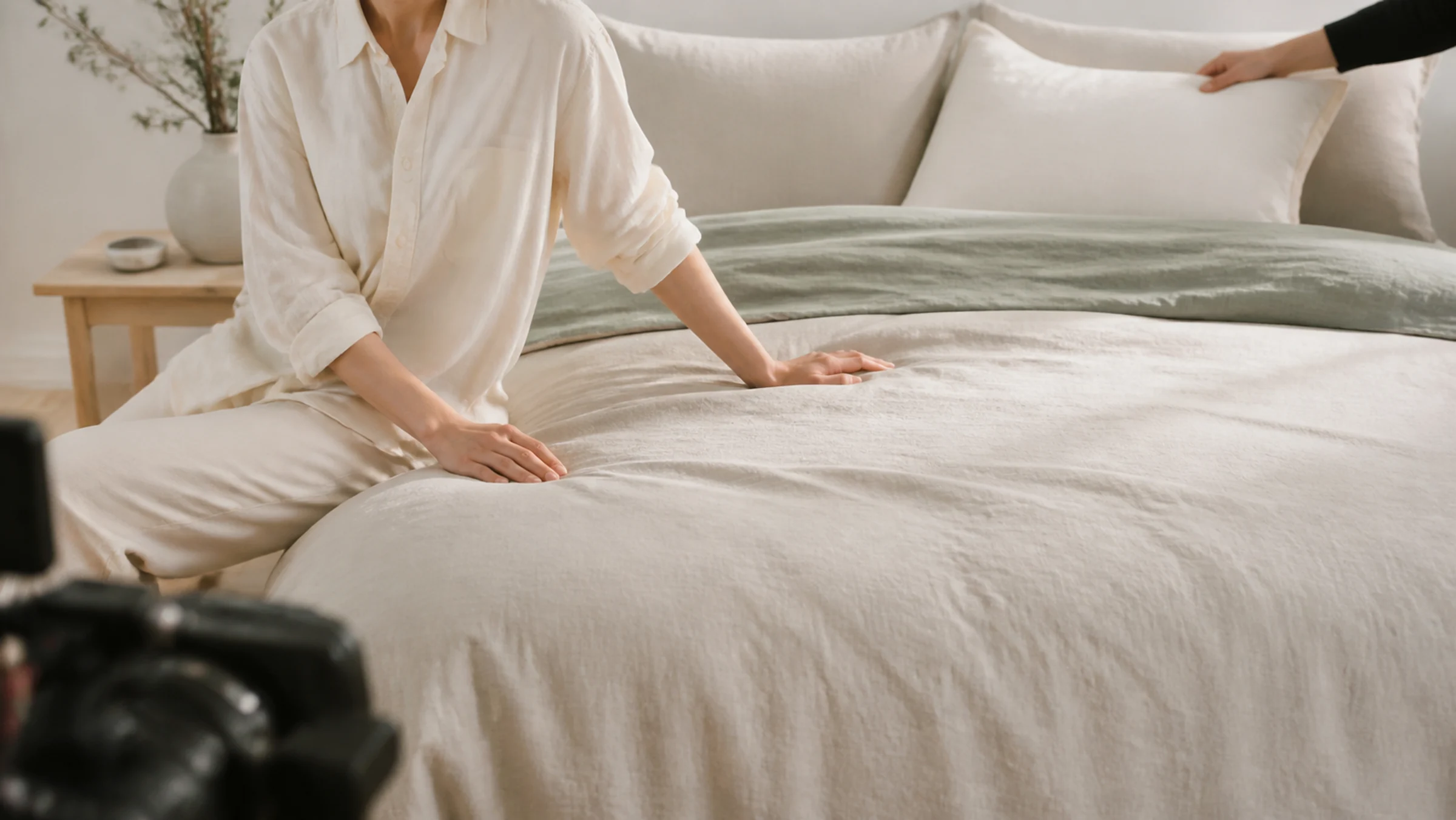
Start with the question the image needs to answer. A person can demonstrate bed-making, handling or scale; product-only views are often clearer for patterns, components and construction.
A full model, hands, partial figure and empty room each provide different information. They also affect casting, styling, schedule, permissions and editing requirements.
Use a person when they explain the product
People can help viewers understand a textile's size against a body, bed or room, or show folding, arranging and handling. Lifestyle content may also connect the product to its intended setting.
If the person obscures the pattern or dominates a thumbnail, the image may fail its product task. Write down exactly what the viewer should learn from including someone.
- Explain product scale
- Demonstrate use or handling
- Show the intended setting
- Suggest contact with the material
- Provide a continuous video action
- Keep important product details visible
Choose full figures, hands or product-only views
A full figure can establish a lifestyle scene. Hands can show arranging, touching or opening a product. A partial figure can provide scale while preserving product emphasis. Unobstructed product views remain useful for color, pattern and included pieces.
Combine approaches when the shot list calls for them. The choice does not need to be the same for every image in the project.
Confirm the casting and channel requirements
Consider the intended audience, size of the person within the frame, required actions, wardrobe sizes and image uses. A product page, video, catalog and advertising image may require different presentation.
Decide whether the face or voice appears, whether third-party clothing or accessories are visible and where and for how long the final material will be used.
Coordinate styling, actions and textile arrangement
Choose wardrobe colors and textures that keep the product's edges readable. Styling and actions should support the shot task rather than introduce competing details.
Movement changes folds, drape and component positions. Plan approach, contact, arrangement and pause points, then retain unobstructed full-product and detail shots in the list.
Confirm permissions before the shoot
Discuss permission for making and using the images, including the parties, channels, territories, duration and any planned editing or sharing. Voice and name use may need separate consideration.
These are project planning points, not a legal conclusion. Seek appropriate review for the actual agreement and intended uses, especially when the circumstances require additional permissions.
Sources and further reading
These sources provide context for the claims or channel requirements discussed here. Review current requirements alongside your product information and project agreement.
- CAC: Civil Code of the People's Republic of China ↗China-law reference: Articles 1018 to 1023 concern portrait rights and related permissions. Actual arrangements depend on the person, image and intended use.