If you source textiles in Nantong or the Yangtze River Delta, sample photography can help you prepare listing and catalog images while the products are still in China. Old Money Visual accepts sample-based photography projects. Confirm the receiving address, contact, delivery window, box count, sample handling and return arrangements before sending anything.
Most avoidable confusion comes from inconsistent identification: a series name on the packaging, a style code in messages and only a color name on the shot list. Use one identifier across the physical sample, product sheet and brief.
Prepare three connected records: identifiable samples, a product inventory and a brief explaining where the images will be used and what each image must show.
Connect the samples, product sheet and shoot brief
The sample establishes what will actually be photographed. The product sheet explains which item it is. The brief explains why the image is needed. Use the same style code, color name or sample number on all three.
Confirm receiving details and handling responsibilities in writing. A general guide cannot establish the address, available delivery time, storage arrangement or return policy for a particular shoot.
If the sample needs assembly, confirm the component list and setup method before the shoot. A mosquito net needs complete-form, opening and support details with the bed and other styling props clearly distinguished. See mosquito-net structure and assembly shot planning.
- Samples and all components that need to appear
- Style codes, colors, quantities and package numbers
- Approved fabric, construction and size information
- Intended image or video channels
- Required shots for each item
- References and directions to avoid
- Requested milestones and product priorities
- Agreed receipt, return and freight arrangements
Give every item a traceable identity
A single collection may include several patterns, colors and components. The inventory should identify what was sent, how many pieces it contains, which style it belongs to and which shots it needs. List pillowcases, duvet covers, sheets and packaging separately when they require individual images.
Use matching identifiers on outer cartons and inner bags, and retain the dispatch inventory. A short, consistent code is more useful than an elaborate naming system that changes between documents.
- Product name and style code
- Color or pattern name
- Quantity sent
- Exact set contents
- Whether packaging must be photographed
- Priority items
- Associated photo, video and detail requirements
- Special handling notes
Record sample condition before dispatch
Check that samples are clean and complete. Note creases, stains, damage, loose threads, shade differences and missing parts before shipment. A recorded issue is easier to assess than a defect whose timing is unclear.
Inspect corners, zippers, embroidery, stitching and labels for products that will be spread out, hung, folded or shown close up. Agree whether a problem can be addressed through normal preparation or requires a replacement sample.
Pack for transport and for an orderly unpacking check
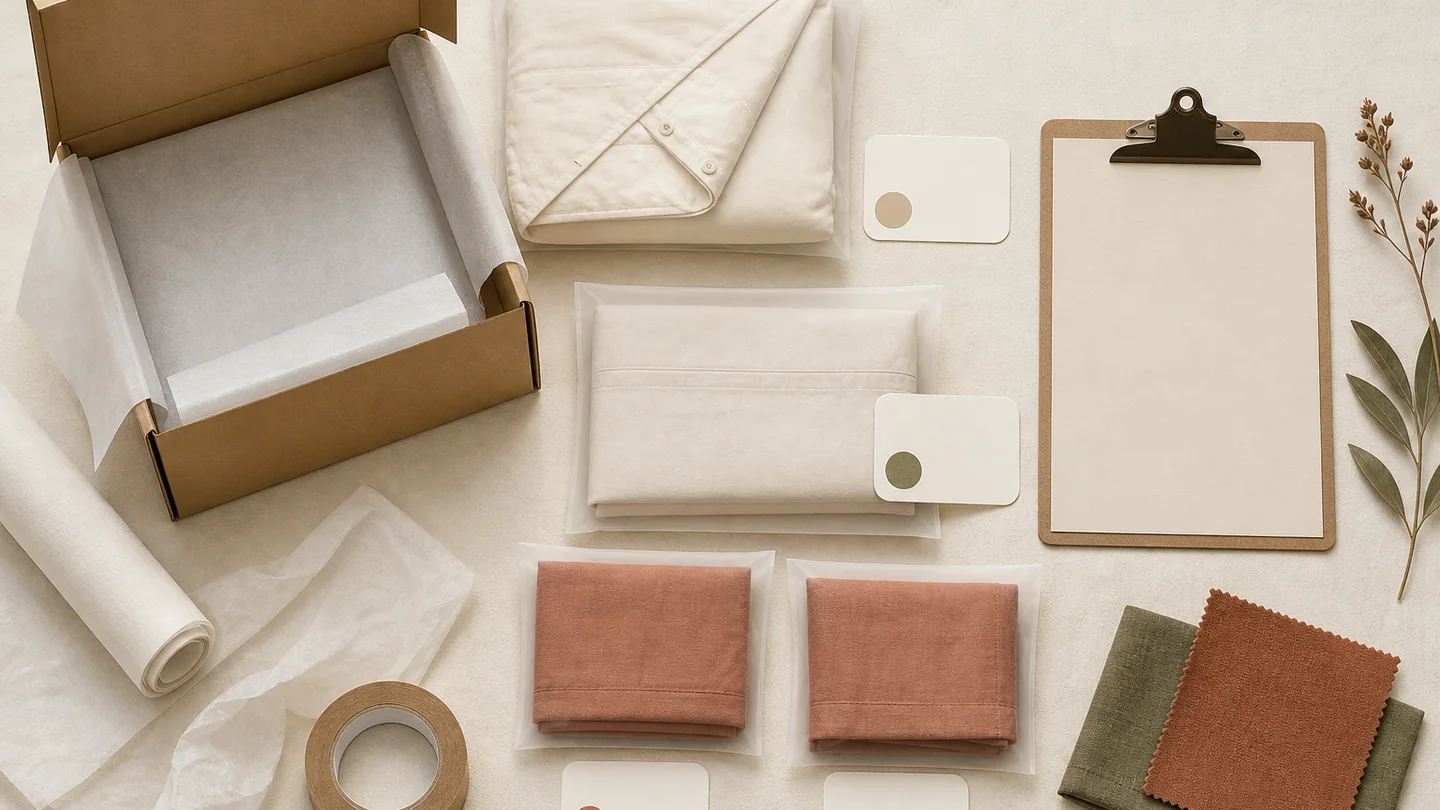
Separate styles and colors, protect vulnerable areas and use appropriate outer protection against compression and moisture. Put identifiers where they can be read without opening every layer. Photograph the samples and packing condition before sealing the cartons.
Do not leave important instructions only on a courier box. Send an electronic inventory and contact information to the project contact. If a paper list is enclosed, protect it from moisture and avoid placing it where it can mark the fabric.
- Separate bags for styles and colors
- Matching carton and inner-bag codes
- Protection for vulnerable details
- Condition photographs before sealing
- Electronic inventory shared with the contact
- Tracking details and carton count recorded
- Receiving information confirmed by both parties
Turn a style preference into a shot requirement
Explain whether the images are for listing thumbnails, product pages, catalogs, social content or short videos. References can communicate lighting, color and setting preferences, but annotate what you like and what should not be carried over.
Separate full-product views, room scenes, patterns, texture, construction, set contents, packaging, white-background images and video actions. Include only the tasks your project needs; the list is not a standard package.
Keep the inventory current after arrival
Check received style codes, colors, components, quantities and visible condition against the dispatch list. If a product is added, a color replaced or a priority changed, update the same record rather than scattering instructions across chats.
Agree any sample holding period, return batches, repacking, freight responsibility and treatment of unusable samples. These are project-specific arrangements, not a warehousing or shipping service implied by accepting samples.
Use a go, clarify, replace or hold decision before dispatch
DISPATCH READINESS GATE
A parcel should leave only after the product record, physical labels and agreed receiving plan can be matched. Arrival alone does not make a sample ready to photograph.
| Checkpoint | Evidence | Owner | Decision |
|---|---|---|---|
| Sample identity | Every item carries the same SKU or temporary ID used in the inventory and brief | Buyer and supplier | Go when matched; clarify before dispatch when names conflict |
| Components and quantity | Packing record lists every piece, colorway, size and box | Supplier with buyer confirmation | Replace or hold when a required component is missing |
| Sample status | Prototype, pre-production or final-sample stage and known visible differences are recorded | Buyer product owner | Go for the approved purpose; hold unsupported customer-facing use |
| Handling limits | Packaging, fragility, folding, steaming and other agreed restrictions are stated | Supplier and buyer | Clarify before the studio handles an uncertain item |
| Receiving and onward plan | Project, contact, address, window, box count and return or onward instruction are confirmed | Buyer and studio | Do not dispatch to an unconfirmed recipient or address |