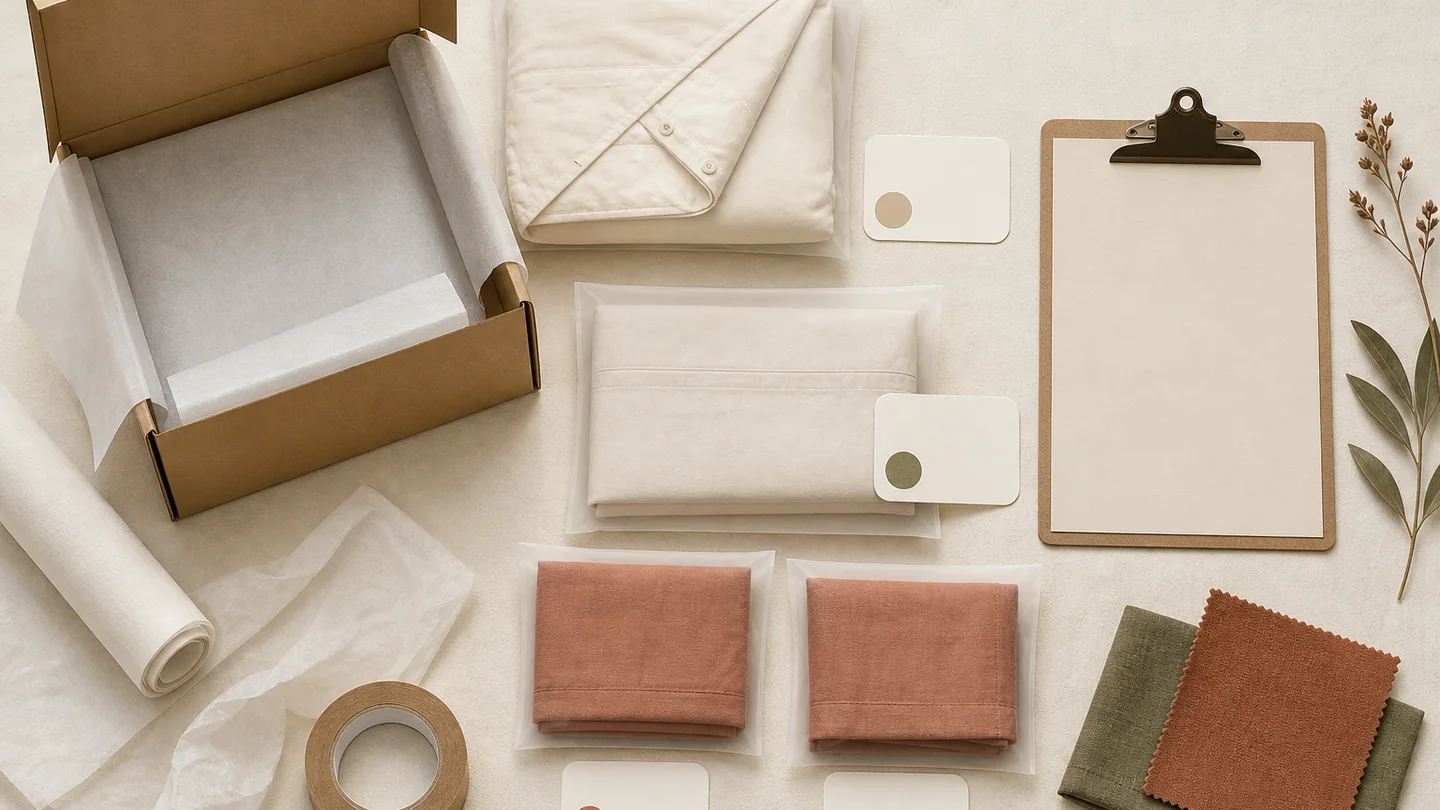
When samples travel from a textile supplier to a separate photography studio, the arrival record is the bridge between packing and shooting. Its purpose is to identify the received items and surface obvious discrepancies before the wrong product is prepared for camera.
A useful record also has a firm boundary. Photography receiving is not factory quality control, laboratory testing, commercial inventory acceptance or warehousing. Buyers should agree the small set of observations needed for the shoot and assign broader inspection tasks elsewhere.
Agree the arrival record before dispatch
The buyer, supplier and studio should use one inventory version. It should list the project reference, carton numbers, SKU or supplier identifiers, colors, sizes, included pieces, sample quantities and any packaging that belongs in the images. Confirm the recipient and receiving window before the supplier sends anything.
Define which arrival photographs or notes are requested and who will review a discrepancy. Without that agreement, one party may expect a detailed inspection while another expects only confirmation of delivery. A clear scope prevents the receiving step from becoming an undefined quality service.
Record identity before preparing the products
Begin with outer-carton count and labels, then connect inner packages and samples to the provided list. Keep the sample code visible in the record without attaching damaging labels to fabric surfaces. If two near-identical colors cannot be distinguished safely, pause and ask for supplier confirmation rather than guessing.
Take only the reference images agreed for the handover: for example, carton labels, grouped contents and a visible issue. These are operational records, not campaign photographs. Store them with the project reference so they do not enter the final asset library by mistake.
| Arrival item | Reasonable record | What it does not establish |
|---|---|---|
| Cartons | Count and readable external identifiers | Complete commercial shipment or freight condition |
| Sample identity | Match against supplied SKU and color labels | Authenticity or conformity to the purchase contract |
| Included pieces | Visible count during agreed unpacking | Hidden contents not opened or tested |
| Visible condition | Obvious moisture, crushing, stains or tears | Absence of latent defects or full product quality |
| Packaging | Presence and visible state of supplied layers | Transit performance or regulatory compliance |
Classify discrepancies by their effect on photography
Use neutral language: expected item, received item, visible difference, supporting image and affected shot. A missing pillowcase, different color code, crushed retail box or unlabelled fabric swatch creates a concrete photography decision. Avoid diagnosing causes that cannot be established at receipt.
Assign one of three actions: proceed with unaffected work, pause the affected view for buyer instruction, or request clarification or replacement. The buyer or named product owner decides whether a substituted or imperfect sample may represent the sale item; the studio should not silently make that decision.
- Quote the current inventory version and carton number.
- Identify the expected and received SKU or component.
- Describe only observable differences.
- Attach a labelled reference image when useful.
- Record the buyer's decision before affected photography continues.
Keep arrival checks separate from quality control
A receiving record cannot verify fiber composition, dimensions, fill weight, colorfastness, stitching tolerances, safety, labeling compliance or performance. Even a visually clean sample may differ from specification in ways a camera does not reveal. Those checks require the appropriate product documents, methods and responsible parties.
Photography can make visible details easier to review, but a close-up remains an image made for an agreed visual purpose. Do not convert it into a pass certificate. When buyers need independent inspection, they should define that work separately from the photography project.
Close receiving with a documented sample disposition
After the shoot, follow the agreed instruction for collection, return or another named handover. Record sample and carton identifiers again if items are repacked. If original packaging must be preserved for photography or return, that requirement belongs in the brief before unpacking.
Temporary handling for a project does not establish warehousing, freight forwarding or order fulfillment. Confirm timing, destination, contact and freight responsibility for each movement. If those details are undecided, flag them as open rather than assuming the studio will hold inventory indefinitely.