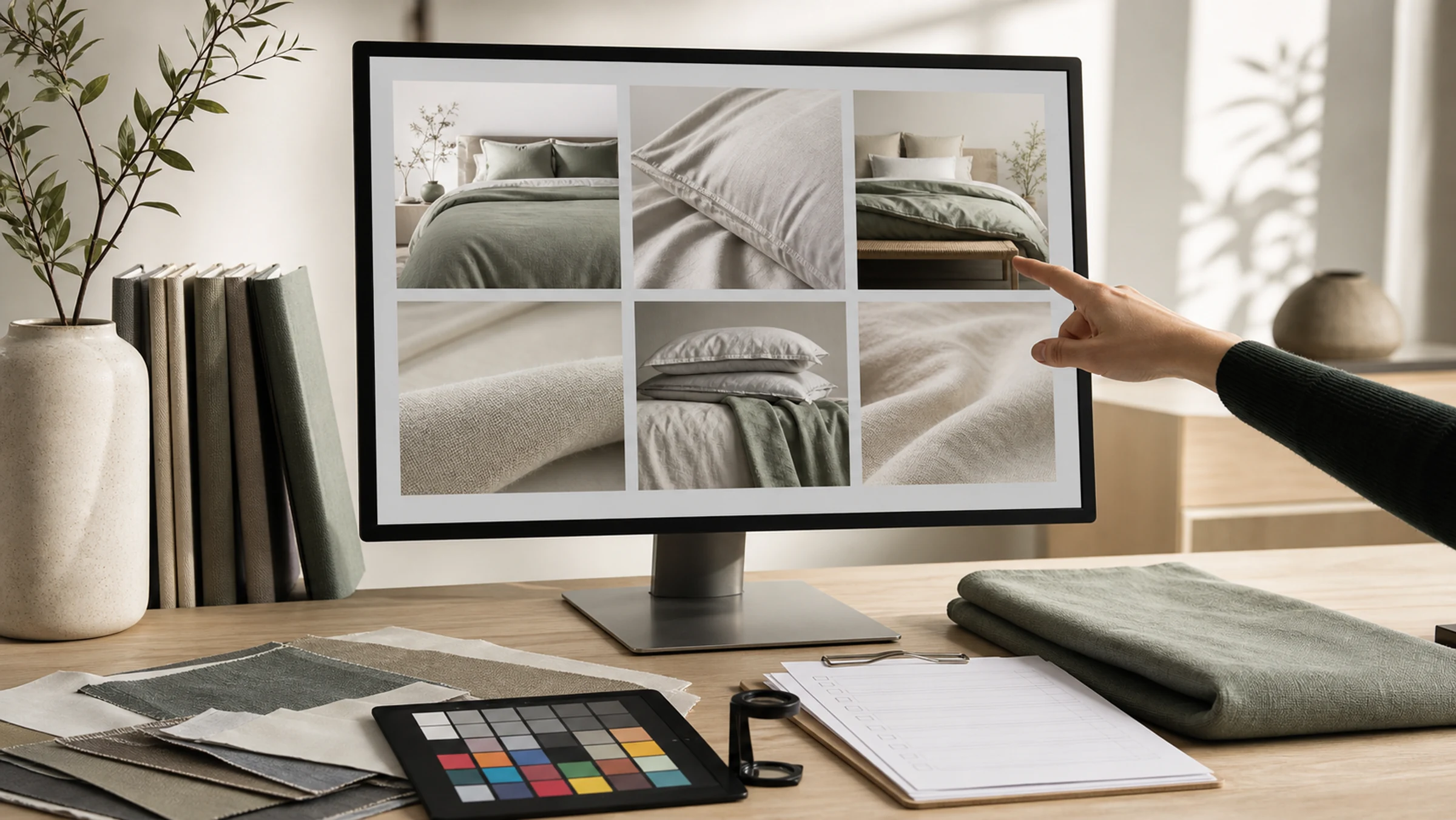
When your textile supplier is in China and your business is overseas, the samples and the image approver may be in different places. A clear handover lets you plan photography around samples already in China while keeping product and creative decisions with the right people.
Old Money Visual is a textile photography studio in Haimen, Nantong, Jiangsu. We photograph bedding, home textiles, fabrics and towels. This guide explains the decisions to make when discussing a remote project, whether samples are in Nantong or elsewhere in the Yangtze River Delta.
Start with the samples you can actually make available
Send the product category, SKU and color list, sample location and expected readiness date with your first inquiry. Explain whether each sample represents the item you plan to sell. A development sample with a different label, trim or fabric should be identified before it becomes a listing image.
Add the intended image uses: ecommerce listings, product pages, catalogs or product video. Include a target image-use date and separate essential views from optional scenes. This gives the studio enough context to discuss scope and unanswered questions before you move the samples.
Give the buyer, supplier and studio a shared handover plan
Choose one buyer contact to consolidate decisions. The supplier needs clear dispatch instructions, while the studio needs the same SKU names and image requirements used by the buyer. Confirm the following responsibilities for the actual project; they are a planning checklist, not an automatic service package.
| Handover | Buyer or brand | Supplier | Studio discussion |
|---|---|---|---|
| Product identity | Approve SKU names, sale contents and product facts | Match samples to the agreed list | Clarify the views needed for those items |
| Dispatch | Authorize the selected samples and handover plan | Label, pack and share the dispatch inventory | Confirm recipient, receiving details and window |
| Arrival issues | Decide how a missing or different item affects scope | Help identify or replace the sample when agreed | Agree an arrival record and discrepancy contact |
| Image approval | Name the approver and consolidate feedback | Clarify product questions when needed | Agree test-shot and file-review checkpoints |
| After the shoot | Choose the agreed sample destination | Confirm collection or return details if involved | Agree holding, packing and freight responsibilities |
Connect every carton to the photography brief
Use one inventory version for the buyer, supplier and studio. It should connect each SKU and color to its included pieces, sample quantity and required views. Keep outer-carton and inner-bag identifiers consistent; a carton marked only with a brand name does not identify the samples inside.
Confirm the address, recipient, receiving window and carton count before dispatch. Ask the supplier for packing photographs and tracking details. If the shipment contains a different color, missing pillowcase or changed label, record the difference and resolve the affected shots before proceeding with that item.
Plan remote approval before extending a setup across the range
Agree which product and setup will establish the visual direction, what you will review, and when feedback is needed. For bedding, this may include the visible set contents, pattern direction, drape and crop space. Fabric and towel projects may need a closer review of surface detail, edges and colorway identification.
Name the approver, their time zone and a practical review window. Consolidate feedback in one annotated response: identify the SKU, view, issue and requested adjustment. Distinguish a correction to the agreed brief from a new scene or extra deliverable. A representative approval does not replace checking product-specific differences across the remaining SKUs.
Review delivered files against the agreed product and shot list
Check that each required view belongs to the right SKU and color. Review included components, pattern, labels, texture, crops and the requested clean or text versions. Confirm file formats and ratios against the destination channel rather than relying on a single export for every placement.
If you plan to prepare listings before the bulk order ships, check that approved images still represent the eventual sale product. A change to the production fabric, components or label may require revised photography. Image delivery, inventory shipment and permission to use the files are separate decisions to confirm.
Close the sample handover as carefully as the image handover
Agree whether the samples will be returned, collected or handled another way, with the destination, timing and freight responsibility recorded. A photography sample arrangement does not establish procurement, stock storage or customer-order fulfillment.
To start a discussion with Old Money Visual, send your product list, current sample location, intended channels, required views and target date. Mark anything still undecided so the quotation can identify the work and the decisions needed next.
Choose the next step according to where the sample is now
START FROM THE SAMPLE LOCATION
Remote production starts differently when a sample is with a Nantong supplier, elsewhere in the Yangtze River Delta, already overseas or not yet approved.
| Current location or stage | First information | Buyer or supplier action | Confirm with the studio | Do not do yet |
|---|---|---|---|---|
| Nantong or Haimen supplier | Supplier contact, SKU map, sample status and intended assets | Confirm the selected sample and prepare a labelled packing record | Project, receiving details, window and shot scope | Do not send an unlabelled sample before the project is confirmed |
| Other Yangtze River Delta location | Exact city, sample count, status and target use date | Plan domestic delivery after the receiving arrangement is confirmed | Arrival dependency, box count and handling plan | Do not treat travel or freight time as a confirmed production schedule |
| Sample already overseas | Available views, product record and whether another approved sample exists in China | Decide whether to return a selected sample or prepare another identified sample | Which method can accurately support the required assets | Do not ask a single image to invent hidden construction or product details |
| Sample not yet final | Expected visible changes, decision owner and intended page role | Define whether the current sample is direction-only or customer-facing | Hold points for test views, reshoot or asset release | Do not present a development sample as approved production goods |
Put this guide into a production plan
Confirm the actual scope from your samples, channels and accuracy requirements; these services are not automatically bundled.