
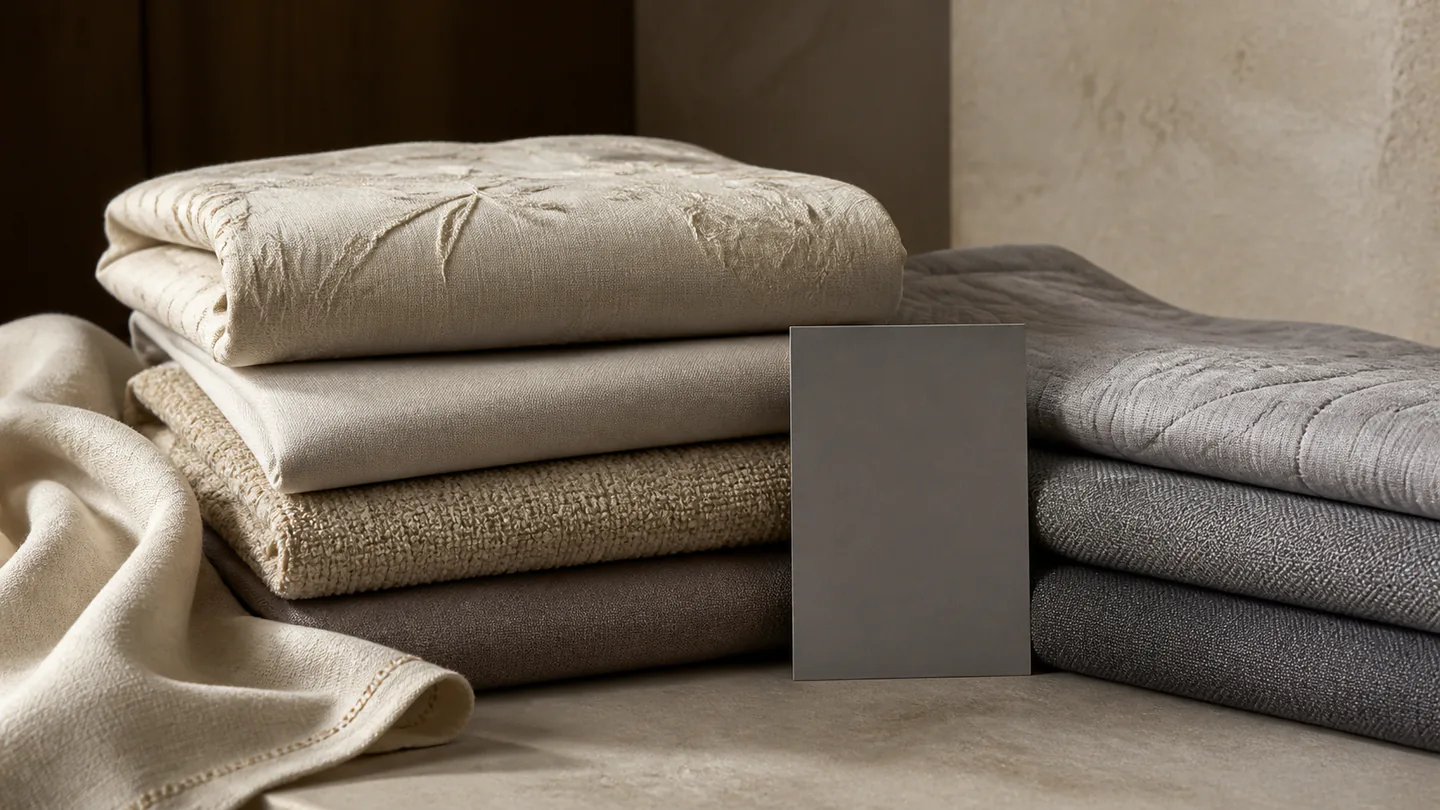
A fabric buyer needs to connect an attractive photograph to a specific material. A close-up may show the weave but hide the pattern repeat; a draped view may suggest how the sample hangs but obscure its reverse. Plan complementary views around the questions your buyer needs to answer.
For overseas buyers sourcing in China, selected fabric samples can be photographed at Old Money Visual in Haimen, Nantong, after receiving details and shoot scope are agreed. Start with article codes, colorways and intended image uses: a sourcing presentation and an ecommerce listing may need different crops and supporting information.
Give each view a different job
Choose the sample form deliberately. A small swatch suits surface detail, but a larger cut may be needed for a complete motif or natural fold. Show a roll only when its presentation matters to the sale; a roll photograph alone rarely explains the fabric surface.
A mat needs both a readable weave or surface detail and a complete product view. Reflection, edging and backing require different checks from a loose fabric swatch. See woven cooling-mat photography planning.
For curtains, a fabric close-up should be paired with the complete hanging form and the actual header and hem construction. Window lighting also needs a separate appearance check. See curtain drape and construction photography.
| View | Buyer question | Keep visible or confirm |
|---|---|---|
| Flat overview | What does the overall surface look like? | Pattern direction, motif coverage and an identifiable article code. |
| Weave close-up | How is the surface constructed? | Actual yarns and texture; avoid sharpening that invents detail. |
| Natural drape | How does this sample hang? | An agreed support and consistent arrangement across comparable fabrics. |
| Face and reverse | Are the two sides different? | Clear labels and the same sample, without implying reversibility. |
| Colorway comparison | Which shade belongs to each code? | Physical samples, consistent lighting and unambiguous color labels. |
| Pattern with scale | How large is the motif? | A real scale reference when agreed; no invented measurements. |
Prepare samples that answer the brief
Ask about the required sample dimensions before cutting or sending material. A tiny swatch cannot demonstrate a wide repeat or a generous drape. Identify the face, grain direction and any finish that needs careful handling. Agree whether creases should be removed and how; do not assume every fabric can be steamed.
- Attach article and color codes to each sample; include a matching inventory.
- Send the actual colorways that need individual photographs.
- Flag flaws, incomplete repeats or sample differences from the sale material.
- Supply approved composition, width and weight separately from the shot instructions.
- Agree whether selvedges, labels or packaging belong in the final images.
Lock the sample form and visual batch reference
Before dispatch, record which physical piece represents each requested image. This prevents a surface close-up from one cutting being paired with a drape view from another without disclosure. The studio can keep an article, colorway or supplier lot reference with the image record when that information is supplied, but the reference identifies the photographed piece only.
A matching lot label is useful for traceability; it is not dye-lot approval or proof that production goods will match. Color approval, specification acceptance and batch release remain separate sourcing decisions based on the buyer's agreed samples, documents and inspection process.
| Decision | Record before dispatch | What the photographs can establish |
|---|---|---|
| Roll, cut length or swatch | Choose a roll for roll presentation, a cut length for folds or repeat coverage, and a swatch for surface detail; list the form sent for each article. | The visible form and condition of the physical piece used in the frame. |
| Article, colorway and lot reference | Attach the approved article and color codes and, when relevant, the supplier lot or batch reference to the exact piece. | Which supplied reference was attached to the photographed sample, not approval of its dye lot or specification. |
| Usable sample size | Confirm dimensions after excluding damaged, marked or unusable edges; compare the remaining area with the required repeat and drape views. | Whether the available area supports the planned composition, without proving full-roll width or production consistency. |
| Face and reverse | Mark both sides physically and state whether separate images are required. | Visible differences between the marked sides of this sample, without implying that the product is reversible. |
| Specification and performance limits | Supply approved width, weight, composition and test information as separate source data. | Appearance, surface detail and handling in the agreed setup; photography cannot prove weight, composition, shrinkage, colorfastness or other tested performance. |
Keep color and product claims grounded
Review one representative setup before extending it across the range. Compare similar views under consistent lighting, then check exported images for lost pale tones, blocked dark detail or exaggerated sheen. Screen displays and viewing conditions vary, so a photograph should not replace an approved physical color reference.
Images cannot establish fiber composition, fabric weight, shrinkage, colorfastness or other tested performance. A flowing fold is not proof of softness, and backlighting is not a standardized opacity test. Keep technical claims tied to supplied documentation. Retouching should remove agreed presentation distractions without changing the weave, finish or colorway identity.
Assign evidence and approval before releasing fabric images
Keep visual approval separate from product approval. The studio can identify the photographed cutting, show its visible surface and prepare agreed files. The buyer or brand remains responsible for connecting article codes, color names, specifications and customer-facing claims to the correct product record.
Use the same sample ID in the inventory, proof filename and delivery manifest. If the physical reference, article code or approved product data changes, hold the affected images until the named owner decides whether the files remain accurate, need a new caption or require another photograph.
| Decision | Evidence to attach | Responsible owner | Release condition |
|---|---|---|---|
| Confirm sample identity | Sample ID, article code, colorway and the inventory version used for the shoot | Buyer or brand product owner | The physical cutting and requested images point to the same record |
| Approve surface and drape | Named proof files and the agreed setup note | Visual approver | Approval covers the visible direction only, not material performance |
| Reference color | Identified physical reference and the agreed viewing or review conditions | Buyer or brand product owner | The reference is recorded; a screen image is not treated as physical color approval |
| Add specifications or claims | Approved source document, wording, version and SKU | Brand or its appointed reviewer | The statement is supplied and approved outside the photograph |
| Release customer-facing files | Final filenames, sample-to-file mapping and release status | Named publishing owner | Known sample or product differences are resolved or the affected files remain on hold |
Match fabric views to the decision they need to support
DELIVERY USE MAP
A useful fabric image library separates sourcing context, ecommerce evidence, catalog consistency and colorway records. Each use still depends on the identified physical sample and approved data.
| Use | Views to prepare | Reusable source files | Approved data | Photography cannot establish |
|---|---|---|---|---|
| Sourcing presentation | Full cutting, weave scale, edge, reverse and drape reference | Clean named masters with article-code mapping | Article code, colorway, width and supplied specifications | Batch approval, hand feel, composition or tested performance |
| Ecommerce PDP | Recognizable product context, surface detail and an approved use relationship | High-resolution surface, detail and scene-capable files | Material wording, dimensions, care and supported claims | Universal screen color or claims not supplied by the brand |
| Wholesale catalog | Consistent front, detail and scale views across the range | Matched crops and text-free source images | SKU names, color names and catalog specifications | Production consistency across goods that were not photographed |
| Colorway library | One controlled view for each identified physical reference | Versioned files under the same review method | Colorway record and the physical reference used | Dye-lot acceptance or identical appearance on every device |
Put this guide into a production plan
Confirm the actual scope from your samples, channels and accuracy requirements; these services are not automatically bundled.
Sources and further reading
These sources provide context for the claims or channel requirements discussed here. Review current requirements alongside your product information and project agreement.
- International Color Consortium: frequently asked questions ↗Official ICC background on color management. A managed workflow does not make a photograph a physical color standard or guarantee identical display across devices and viewing conditions.
