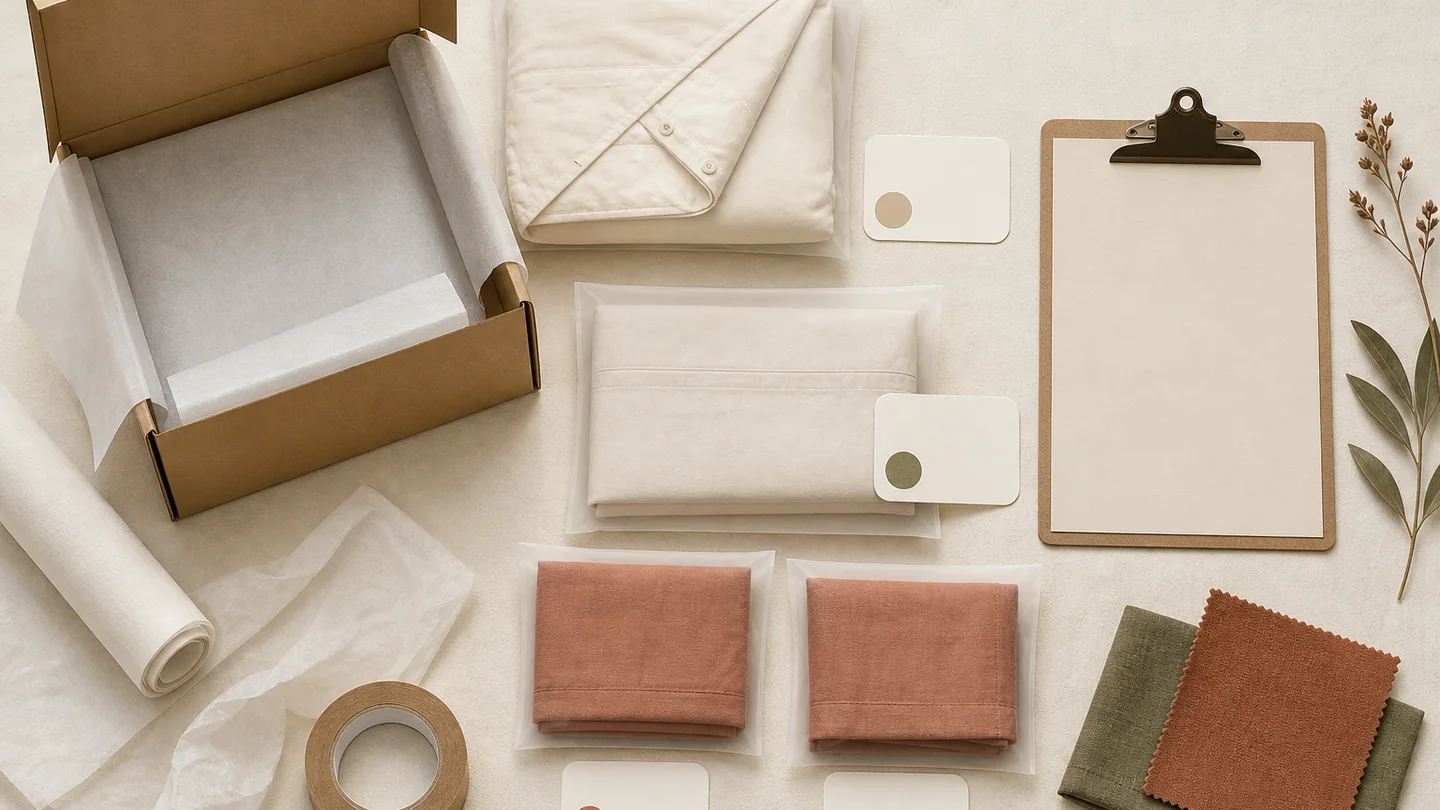
A photography shipment should let someone identify the product without guessing which style, color or component it belongs to. This matters when an overseas buyer gives instructions to a supplier in China and a separate studio receives the samples.
Use this checklist for the physical handover. The broader shoot-preparation guide covers product information, image requirements and production decisions. Confirm the actual recipient and handling arrangements before any shipment to Old Money Visual in Haimen, Nantong.
Freeze the dispatch list before packing
Use the agreed product list rather than a supplier's entire collection. Check SKU, supplier reference, color or pattern, size, included pieces and quantity. Flag any substituted sample or unfinished detail. For a bedding set, list the duvet cover, sheet and pillowcases separately when their identities or quantities could be confused.
Attach the image tasks to that list: full set, individual components, labels, packaging or close-ups. If packaging must appear in the photographs, it is part of the sample handover and needs to arrive in an agreed condition. Confirm whether a spare is useful for a particular item; do not assume two of everything are required.
Label the item, inner package and carton consistently
Put identifiers where they can be read during unpacking without marking the product. Agree a safe way to attach labels; avoid putting adhesive directly on a visible fabric surface. Keep similarly colored samples in separately identified packages instead of relying on visual shade recognition.
| Layer | Record | Example format, not an actual shipment |
|---|---|---|
| Sample or inner bag | Buyer SKU, supplier reference, color and component | DEMO-01 / supplier ref / sand / duvet cover |
| Component grouping | All included pieces and quantities | One cover; two pillowcases; no sheet |
| Outer carton | Project reference, carton number and inventory version | PROJECT-DEMO / carton 1 of 2 / list version 1 |
| Electronic inventory | Which carton contains each identified item | DEMO-01 sand components → carton 1 |
Choose protection around the product's preparation needs
Protect samples from moisture, dirt, abrasion and avoidable compression during transport. Keep hard fittings, hangers or loose accessories from rubbing against surfaces that will be photographed. Separate packing material from textile surfaces if it could transfer marks or fibers.
Bulky duvets and pillows, folded towels, fabric rolls and small swatches need different handling. Ask about compression, folding and any recovery or preparation required after opening. Supply approved care instructions and flag materials that should not be steamed or pressed. Do not assume the studio can remove every transport crease or correct a damaged sample.
Photograph the contents before sealing the carton
Take useful reference photographs of the labelled samples, grouped components and packing arrangement. Record known stains, loose threads, shade differences, missing pieces or damaged packaging. These photographs help explain the dispatch condition; they are not a substitute for a product-quality inspection.
Keep the records tied to the SKU and carton number. A folder of unidentified fabric close-ups is hard to compare with an arrival query. Send the electronic inventory and relevant photographs to the agreed project contact before or with the tracking details.
- SKU and color are readable for each sample group.
- All included components and quantities match the dispatch list.
- Known condition issues and handling instructions are recorded.
- Carton numbering matches the electronic inventory.
- Packaging intended for photography is identified separately.
Make dispatch and discrepancy messages easy to act on
Before dispatch, confirm the receiving address, recipient, phone, receiving window, carton count and sender contact. Then share the courier, tracking reference, dispatch date and inventory version in one handover message. Tell the contact if the shipment changes or arrives in separate batches.
Agree who records arrival differences and who decides the next step. A useful discrepancy note identifies the carton, SKU, expected item, received item, visible issue and supporting photograph. Resolve a missing component or substituted color before the affected image task proceeds.
Record the plan for samples after photography
Agree the return or collection destination, sample holding period, repacking needs and freight responsibility for the project. Tell the studio if original packaging or particular identifiers need to be retained. A dispatch label alone does not establish where the samples should go after the shoot.
The downloadable sample inventory includes a clearly labelled example row. Replace it with the actual products and add your carton references in the notes field or an accompanying packing list. Keep one current version shared by the buyer, supplier and studio.