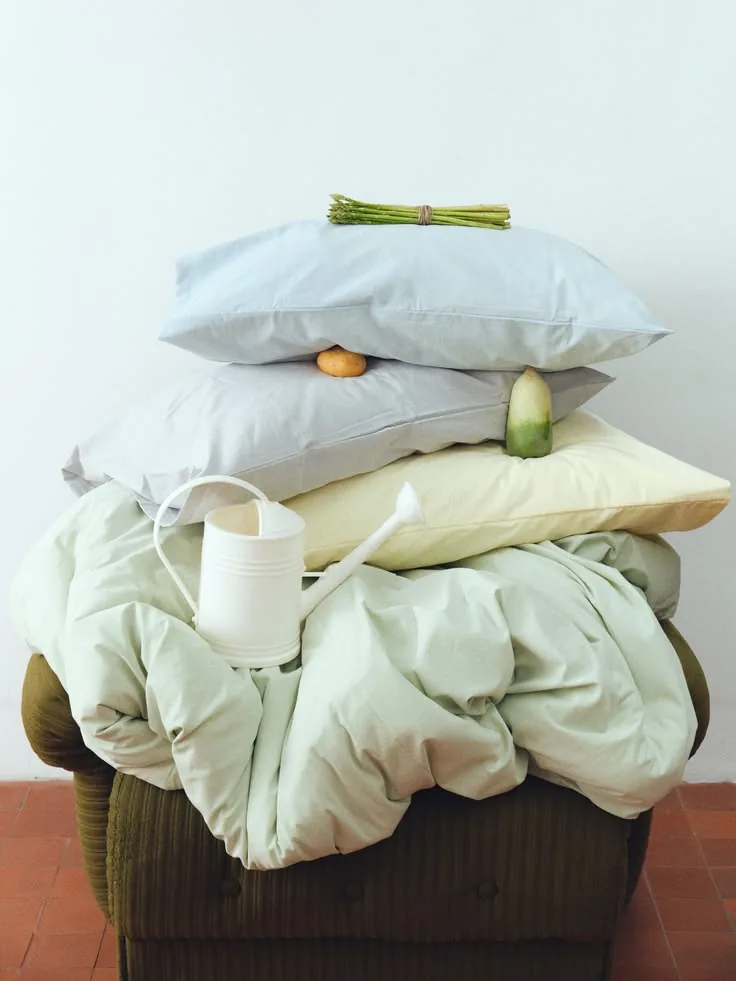
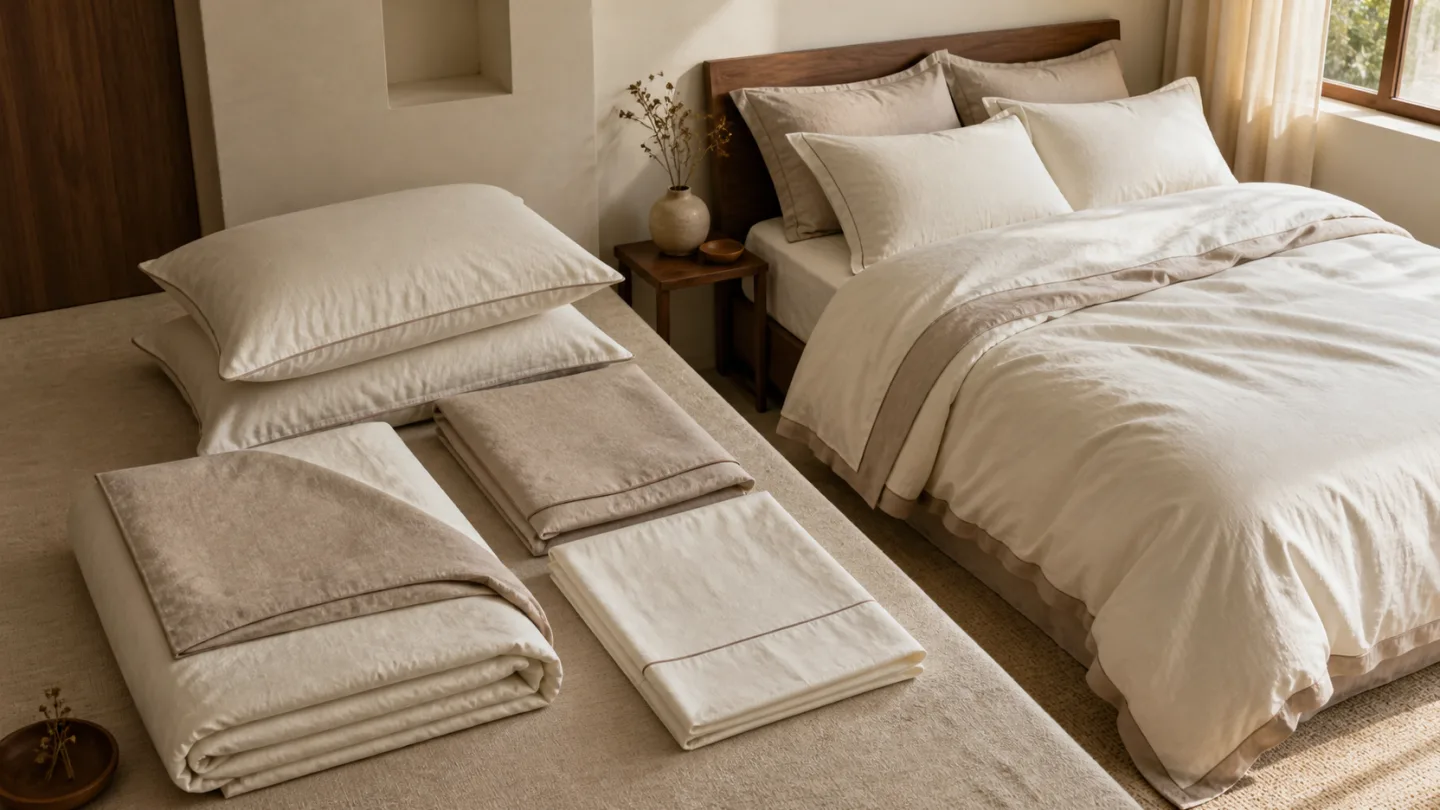
A decorative cushion needs shape, pattern and styling views. A convertible pillow blanket also needs images of the stored and unfolded states. Similar product names should not conceal these different tasks.
Confirm the sales name, style, included components and opening method. Use complete views for the finished form, profiles and close-ups for visible depth, piping and closures, and unfolded views only where the actual product supports them.
Start with the product: Cushions and convertible pillow blankets
Confirm the sales name, style, included components and opening method. Use complete views for the finished form, profiles and close-ups for visible depth, piping and closures, and unfolded views only where the actual product supports them.
Identify the actual sale item, product name, style code and intended page position before choosing white-background, flat lay, room or detail views. Base the shot count on product differences and information needs rather than copying a standard package.
Give each image a specific job
One image rarely explains shape, construction and use equally well. Separate the shots by task so the team can check each requirement during capture and delivery review.
| Image task | What it should explain | What to check |
|---|---|---|
| Complete product | Cushion shape, pattern and both sides | Show full edges and the correct style |
| Profile and edge | Visible depth, piping and stitching | Do not infer filling or recovery performance |
| Closure and unfolded state | Storage, zipper or conversion relationship | Use the actual sale version |
| Use scene | Relationship with a sofa, bedding or room | Do not imply that props or an insert are included |
Record the transformation as one controlled sample sequence
Photograph the sequence with one identified sample and keep its style code, color and version attached to the shot log. Do not combine closed and open frames from different variants or use the sequence as proof of durability, recovery or functional performance.
| Sequence state | Frame to capture | Control point |
|---|---|---|
| Closed front | Complete front, full edges, pattern direction and stored shape | Start with the exact sale sample rather than a styled substitute |
| Closed reverse | Complete reverse, seams, label position and visible closure location | Keep the same orientation and sample identity as the front view |
| Closure access | The actual zipper, flap, pocket or opening in its accessible state | Document visible construction without claiming operating life or strength |
| Intermediate transition, only if useful | One step that clarifies how the stored form opens or where the blanket is held | Omit it when it adds no information or could imply an unsupported mechanism |
| Fully opened blanket | Complete outline, front and reverse relationship, edges and visible folds | Use approved records for dimensions, warmth, material and performance |
| Insert and cover status | Separate component frame when an insert, removable cover or other part is physically present | Confirm what is included from the approved sale list rather than the photograph alone |
| Exact sample version | Label or identifying detail plus the corresponding style code in the shot log and filename | Do not mix prototypes, colorways or construction revisions in one sequence |
Confirm the product information before shooting
Images must match the real sample, style code and approved product information. Ask the brand to supply and approve dimensions, fiber content, filling, weight, functions, certifications, care and intended-use statements. Do not infer them from the photograph.
Filling, weight, recovery, warmth, washability, dimensions, durability and functional performance require approved product information. Neither a still photograph nor a transformation or compression demonstration establishes those facts by itself.
- Sales name and style code
- Single item, set or convertible-product components
- Front, reverse, pattern and edging
- Closure and unfolding method
- White-background, product-page or scene use
Connect main images, details and use scenes
A main image establishes product identity. Product-page images can add construction, close-ups, components and confirmed specifications. Room scenes explain space or use, but do not replace clear views of the sale item. Plan safe crop space for landscape, portrait and square uses before capture.
Old Money Visual is based in the Nantong Haimen home-textile district in Jiangsu, China. Buyers sourcing in China can discuss a sample-based shoot before arranging their overseas inventory shipment separately. Confirm the actual settings, shot count, post-production, timing and usage scope for the project.
When the sale item is a blanket or throw rather than a cushion or pillow, review the complete outline, edge finish and how the fabric falls as separate image tasks. See blanket and throw photography shot planning.