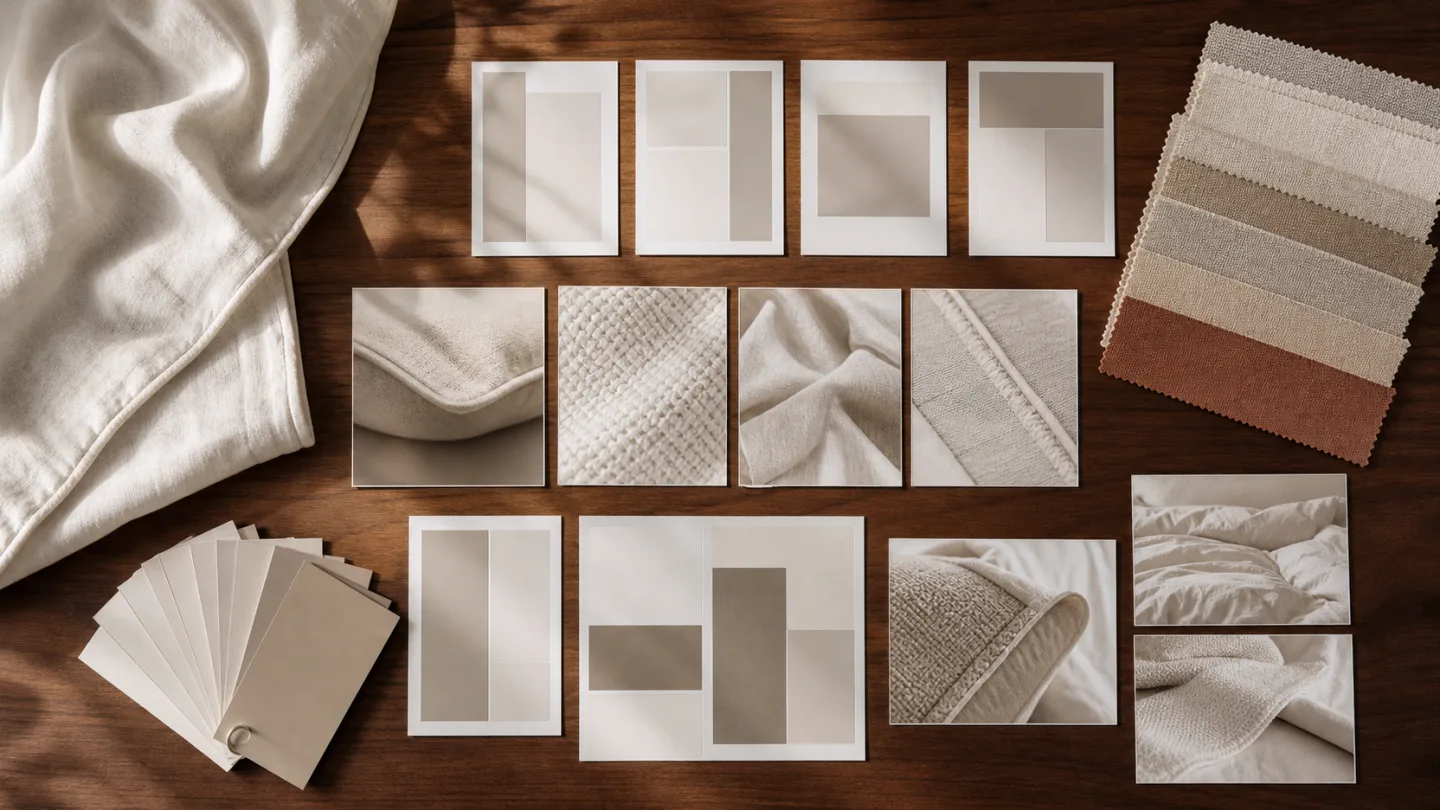
Use a white background to make the product itself, its outline and included components easy to read. Lifestyle, dimension and detail images serve additional purposes, so one product view need not contain every fact.
For a sample-based shoot in Nantong, share the intended image uses and approved product information. Dimensions, materials, filling and performance claims come from the buyer or brand; publishing requirements come from the destination channel.
Begin with a complete product view
Capture the whole item before sides, edges, labels and confirmed construction details. For bedding sets, identify the pattern and components. Finished pillows and inserts need distinct profiles; duvet inserts need clear quilting and edges.
Keep pale textiles distinguishable from the white background. Brightening the background should not erase seams, edges or weave. The review should compare the cleaned background and product boundary together rather than treating a white value as the only objective.
- Product name, SKU and photographed sample ID
- Complete outline without cropped edges
- Front, reverse, side or profile views required for this product
- Details linked to the correct SKU
- Included pieces distinguished from props and supports
Choose views by the product question
A white-background set should be planned from the physical product and its sale unit. Use the matrix to decide which view answers a buyer question, then record the exact sample and component shown in the proof.
Marketplace main-image requirements differ from a general clean background treatment. Before preparing textile assets for an Amazon listing, separate main-image recognition from supporting images and A+ planning. See plan textile product images for Amazon.
| Product question | Useful view | Evidence to prepare | Boundary to keep visible |
|---|---|---|---|
| What pieces are included in a bedding set? | Complete grouped view plus separate components where needed | Approved sale list and labelled duvet cover, sheet or fitted sheet and pillowcases | Inserts, decorative pillows and supports are not implied as included |
| What is the form of a finished pillow? | Front, reverse and side profile | Identified finished pillow and the required orientation | The profile does not prove support, comfort or health outcomes |
| How is a pillow insert constructed? | Insert-only outline, profile, seam and label details | Exact insert SKU and current label version | A pillowcase or staged bed remains outside the sale contents unless confirmed |
| What distinguishes a duvet or quilt? | Fully open view, natural arrangement, quilting and binding details | Identified sample with front, reverse and edge requirements | Visible loft does not establish filling, weight or warmth |
| Which variant does this image represent? | Comparable complete and detail views for the selected color or pattern | SKU-to-sample map and approved color names | An unverified digital recolor is not a physical variant record |
Review the product edge, surface and retouching separately
Check whether the product remains visibly separate from the background, especially along white hems, pale binding, transparent mesh or fine fibers. Review seams, weave and shadow transitions at the intended display size so background cleanup does not remove real construction.
Retouching can address agreed presentation distractions, but it should not invent a straighter edge, fuller profile, different colorway or absent component. Record any composite, cleanup or shared detail so the final image remains traceable to the supplied sample.
Know what the image can and cannot establish
A white-background image shows the photographed appearance. It does not independently establish measurements, material composition, fill weight, warmth, performance or test results; use approved supporting information for those statements.
A channel may set current requirements for a particular marketplace, category or account. Check those requirements in the actual publishing interface before release. A visually approved file is not a guarantee of platform acceptance or search performance.
Prepare the samples, brief and release record together
Record samples, packaging, labels, SKU, front and back, components and image uses in one brief. For multiple SKUs, review each color, pattern, material and construction change rather than assuming one photograph represents every variant.
Before delivery, map each filename to the product, view and approved status. Hold a file when the sample identity, sale contents or supplied product facts remain unresolved, even if its composition and background have passed visual review.
- Buyer or brand confirms the sale unit and product facts
- Studio records the sample and requested view
- Visual approver reviews outline, surface and retouching
- Publishing owner checks the current destination-channel requirement
- Final manifest records filename, SKU, view and release status
Sources and further reading
These sources provide context for the claims or channel requirements discussed here. Review current requirements alongside your product information and project agreement.
- Google Merchant Center: image link requirements ↗Official Google Merchant guidance for product images. Check the current destination, account and product requirements before upload; meeting documented requirements does not guarantee approval or visibility.
- Amazon Seller Central: product image guide ↗Official Amazon entry point for product-image guidance. Requirements can differ by marketplace, category and account, so confirm them in the current publishing workflow.