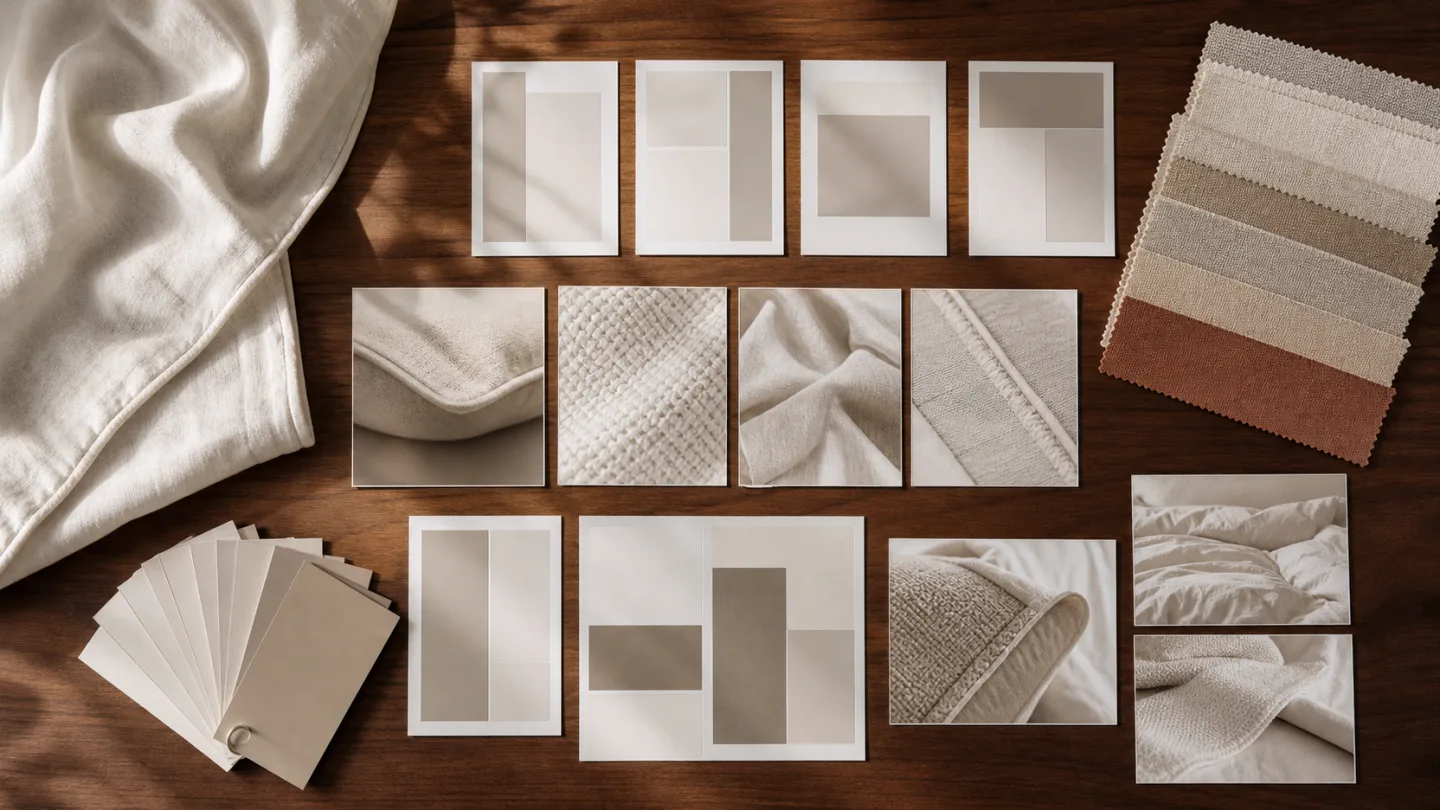
For international buyers sourcing textiles in Nantong, preparing images while samples remain in China can make the product-page plan easier to resolve before overseas shipping. Start with what a buyer needs to understand so main images, details, scenes and diagrams do not duplicate or contradict one another.
Old Money Visual is based in Nantong Haimen and plans images around real samples, approved facts and intended placements. This guide does not establish fixed platform sizes or ranking outcomes; check current requirements for the actual channel and category.
Start with the questions the buyer needs answered
A useful sequence explains what the product is, which components are included, how its pattern looks, where its fabric or construction details can be seen, which specifications apply and how it relates to a room. Put those questions in the brief instead of asking one image to carry recognition, dimensions, material and atmosphere.
Separate bedding components from finished pillows, separate inserts and standalone duvets or quilts. Names, specifications and feature wording must match the actual samples and approved product facts.
| Placement | Main information task | Suitable imagery |
|---|---|---|
| Main listing image | Recognize the item and its appearance | Clear complete view or a purposefully framed scene |
| Product-page opening | Contents, full form and visual introduction | Set grouping or complete pillow or duvet |
| Construction and detail | Patterns, quilting, edges, labels and actual features | Close-ups tied to the correct style |
| Specifications | Approved dimensions, material, components and parameters | Supporting images matched to the data |
| Use scene | Bed, space and coordination | Context that keeps the product visible |
Give each product category its own shot logic
Bedding sets need component and pattern relationships, including pillowcases. Finished pillows need shape and side views. Inserts need independent edges, labels and groupings. Duvets and quilts need complete contours, quilting and natural arrangement. Decide the category before choosing the sequence.
Do not represent every SKU with arbitrary digital recolors of one photograph. Changes in color, pattern, fabric, structure or use may require a corresponding sample and separate review. Keep the listing faithful to the actual variant.
- Bedding components and pattern relationships
- Finished-pillow shapes and profiles
- Insert construction and labels
- Duvet quilting, edges and arrangement
- Every detail matched to its style code
Plan recognition separately from explanation
The main image should make the item identifiable. The product page then expands on full form, details, specifications and use. Atmosphere without a clear subject makes recognition difficult; a page of only complete white-background views can leave construction and components unexplained.
Platforms can differ in ratios, permitted elements, file rules and category requirements. Capture with the necessary margins, then verify sizes, counts and upload requirements in the current publishing account.
Match specifications and features to the pictures
Photography can show actual color, pattern, outline, quilting, edges and labels. It cannot infer or create fiber content, measurements, fill quantity, performance, test results or outcomes. Have the brand approve specification diagrams and feature text, then match them to the sample, style code and images.
Identify concept scenes, composites and styling items from another product clearly during production and publication. They must not become implied client work, performance evidence or platform guarantees. Accurate product information matters more than repeated keywords.
Write a one-page brief before samples are sent
Include the sales name, code, category, components, colors, patterns, approved specifications, target channels, main and detail-image tasks, labels or packaging to show, sample arrangements and reviewers. That gives the product, copy and shot plan one common reference.
Old Money Visual can discuss ecommerce photography based on actual samples and project scope. Confirm settings, people, image count, retouching, dates and usage rights; an unconfirmed resource should not become a published capability or promised result.
- Sales name, style code and category
- Components and patterns
- Approved dimensions, material and functional facts
- Channels and page placements
- Main, detail, close-up and scene tasks
- Samples, labels and packaging requirements
- Review and delivery arrangements
Sources and further reading
These sources provide context for the claims or channel requirements discussed here. Review current requirements alongside your product information and project agreement.
- MIIT: E-Commerce Law of the People’s Republic of China ↗Chinese official reference on accurate product information. Use approved product facts and confirm current publishing requirements for the relevant market and platform.