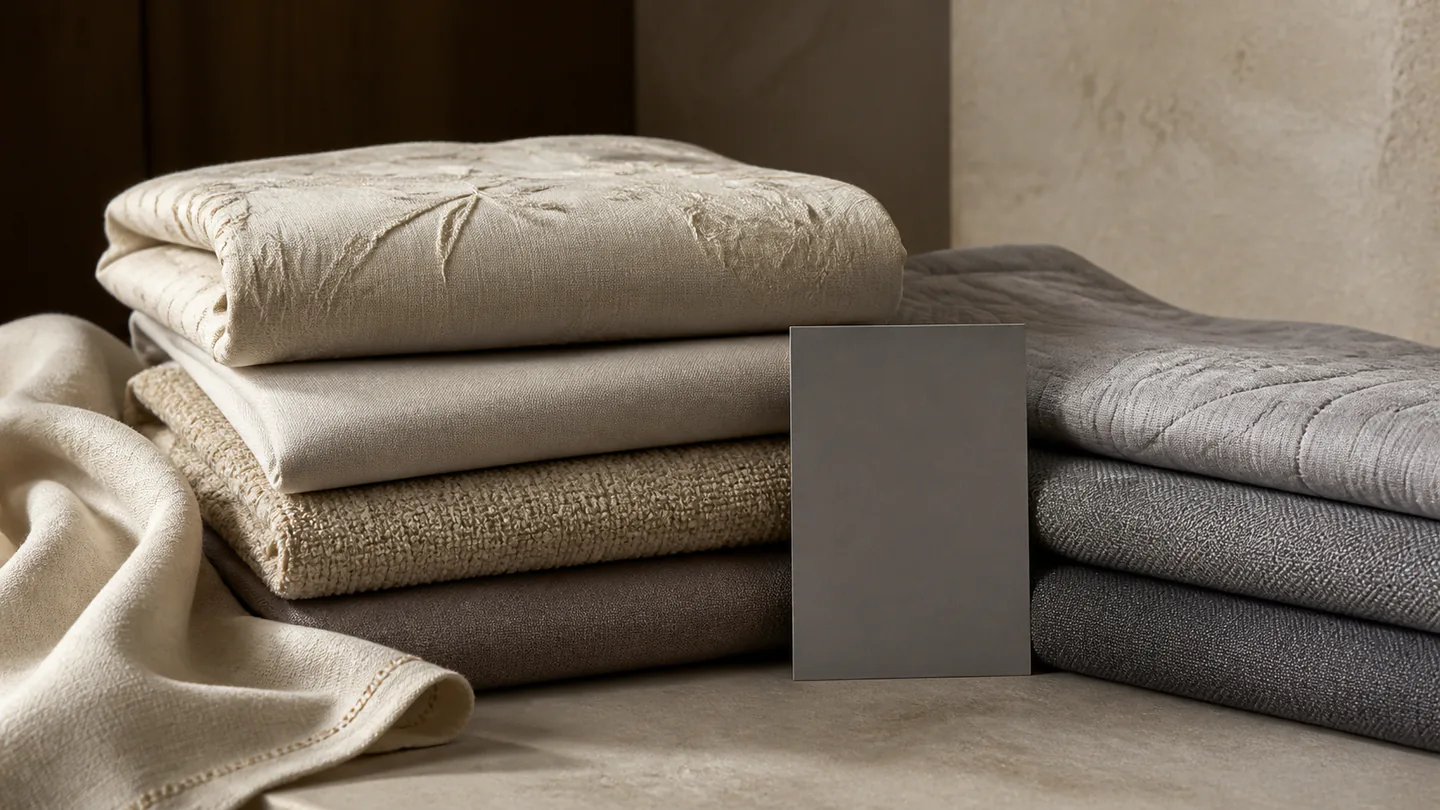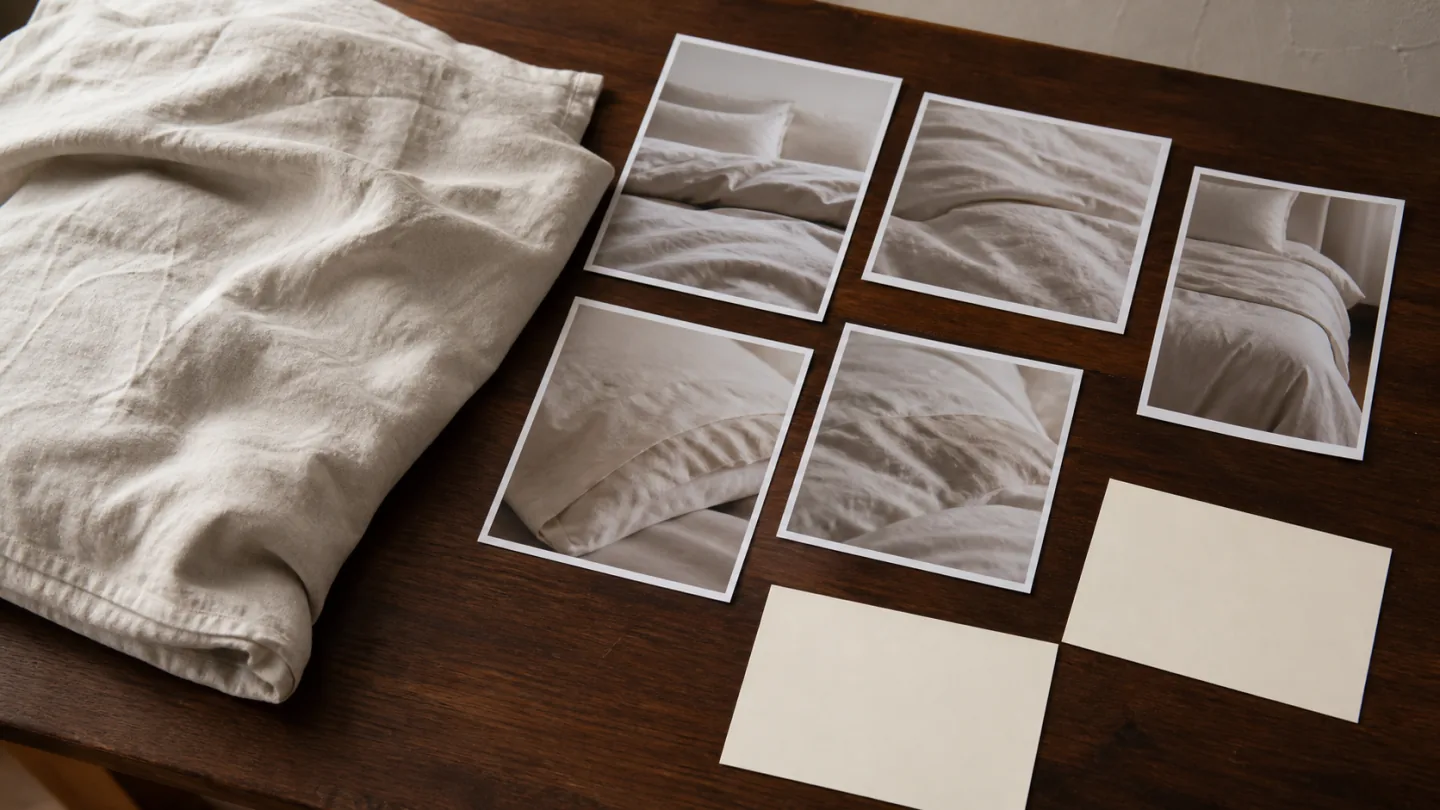
Textile post-production can include exposure and color adjustments, local cleanup, composites and channel-specific exports. Each needs its own scope and acceptance criteria rather than a single instruction to perfect everything.
Editing cannot reliably recover the wrong sample, missing components or an unphotographed feature. Resolve those issues at sample review and test-shot stages so post-production can focus on the agreed images.
Define the basic image adjustments
Basic processing may cover exposure, white balance, overall tone, contrast, small composition changes and routine cleanup. The aim is a consistent set in which the product remains clearly identifiable.
Agree additional crops, text versions and special exports separately. Basic processing does not by itself define an unlimited revision or versioning scope.
- Exposure and white balance
- Overall color treatment
- Highlight and shadow detail
- Basic cropping
- Routine dust cleanup
- Consistency across the set
- Agreed file exports
Separate local retouching from compositing
Detailed retouching may address loose threads, marks, edges or distracting creases while retaining texture. Composites may replace a background or combine captures, and require different source material, time and review.
Name the images needing extra work and describe the intended result. A request to retouch everything does not explain how far an editor should go or whether composites are included.
Preserve folds, texture and product color
Natural folds communicate softness, thickness and drape; accidental creases may obscure structure. Distinguish them before editing so cleanup does not erase weave, pile or stitching.
For weave, printed repeats or embroidery, review a proposed cleanup against the same area in the source capture. Removing a stray fiber should not erase a real stitch, repeat a decorative element or clone a cleaner pattern over a construction difference. Mark the affected area on a proof and describe the distraction separately from the product feature that must remain. If the source is too soft or obscured to make that distinction, request a better capture or leave the feature unchanged instead of inventing detail. Approve the result both close up and at its intended page size; apparent sharpness alone is not the acceptance criterion.
Review color against the sample, approved test image and intended output. Displays and print conditions vary, so agree review conditions without promising identical appearance everywhere or changing the product for a mood.
Resolve sample and capture problems at the shoot
Incorrect SKUs, missing pieces, damage, reversed patterns, concealed construction and absent views generally need action before or during photography. Rebuilding them later can misrepresent the product and add approval risk.
Images that identify a product or explain its components need a traceable factual basis. Recheck any AI-assisted or composite treatment that changes those facts before approving its use.
Approve an editing reference and give precise feedback
Use representative images to agree tone, skin or hand treatment, folds, cleanup and texture preservation. Different colors and materials may need more than one reference image.
Give a filename, location, issue and expected change for each comment. Separate corrections from aesthetic changes and new composites, then review all affected crops and exports after editing.
- Representative review images
- Overall tone and product color
- Preserved fabric texture
- Folds and loose-thread treatment
- Background and edges
- Composite scope
- Consolidated feedback contact
- Review of channel exports
Sources and further reading
These sources provide context for the claims or channel requirements discussed here. Review current requirements alongside your product information and project agreement.
- MIIT: E-Commerce Law of the People's Republic of China ↗China-market context: Article 17 concerns accurate product information. Retouching and composites should remain consistent with approved product facts.
- SAMR: Advertising Law of the People's Republic of China ↗China-market context: Article 8 addresses accurate product descriptions. Post-production should not introduce unverified product attributes.