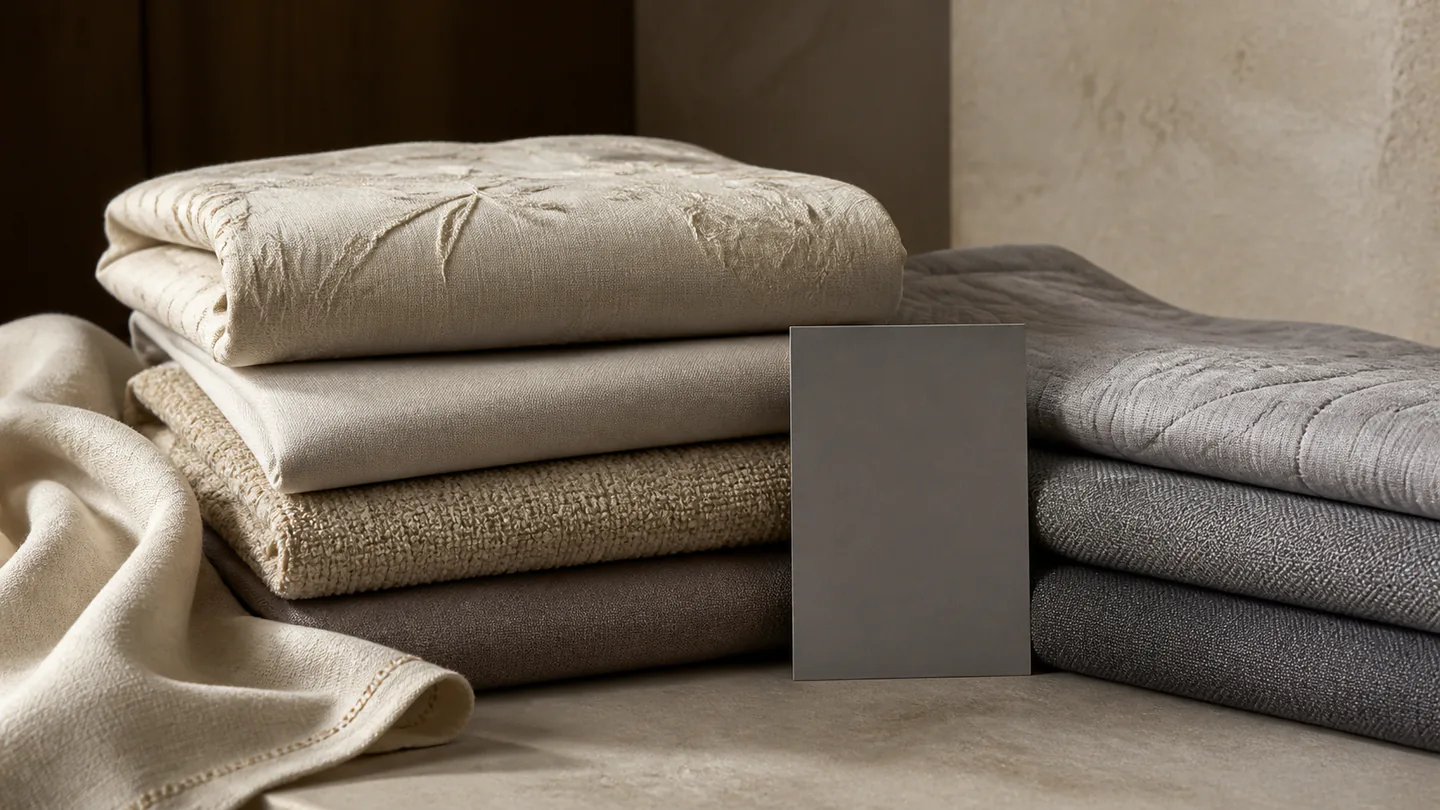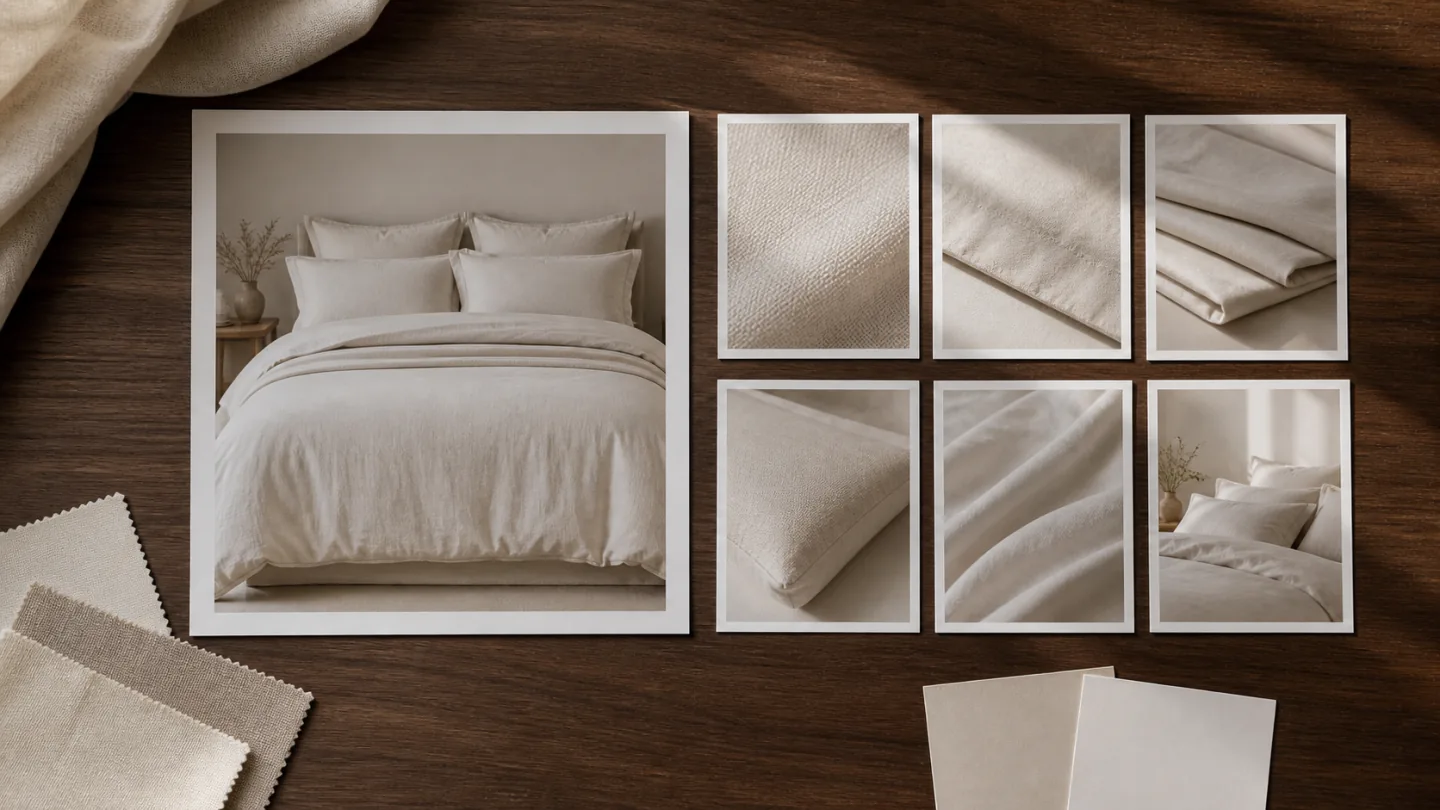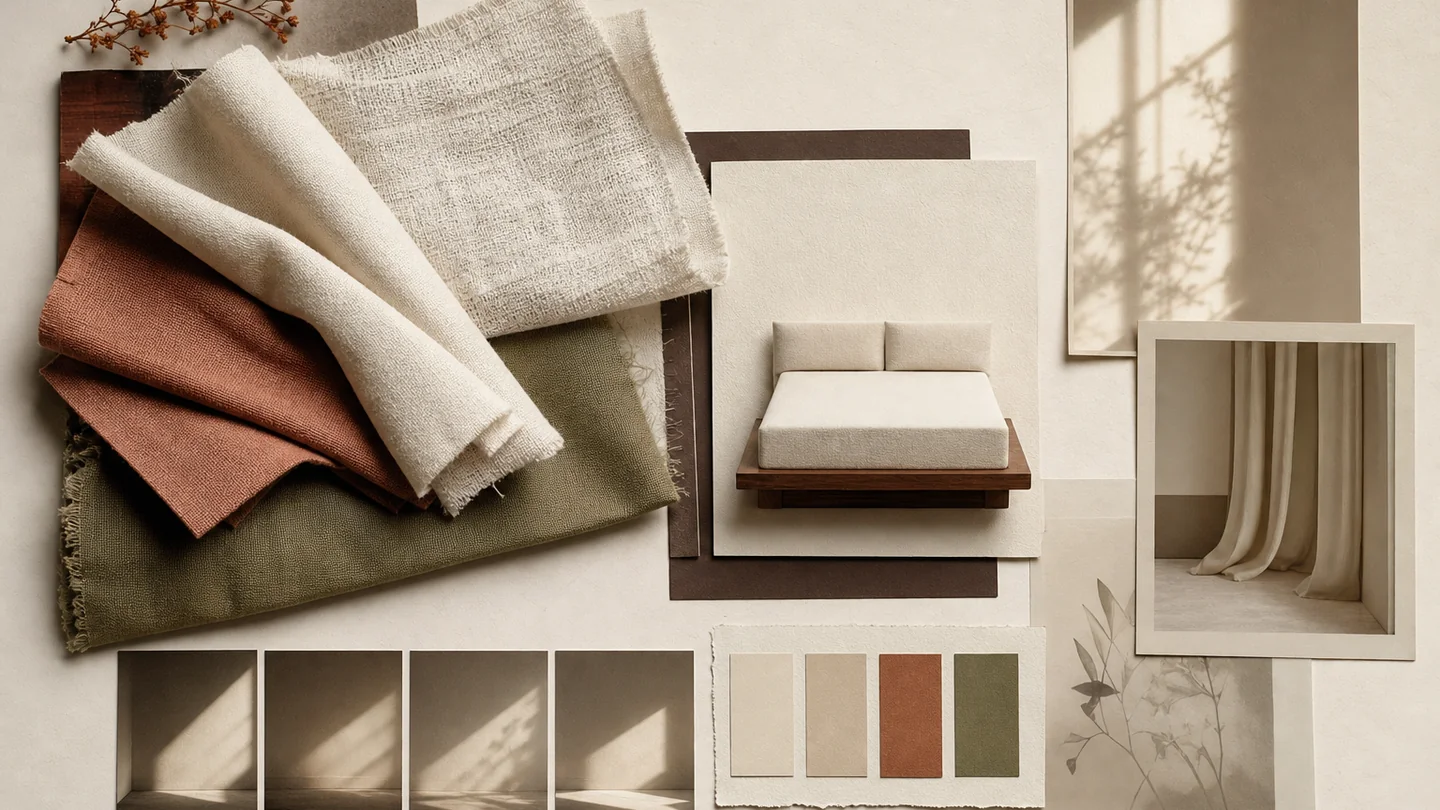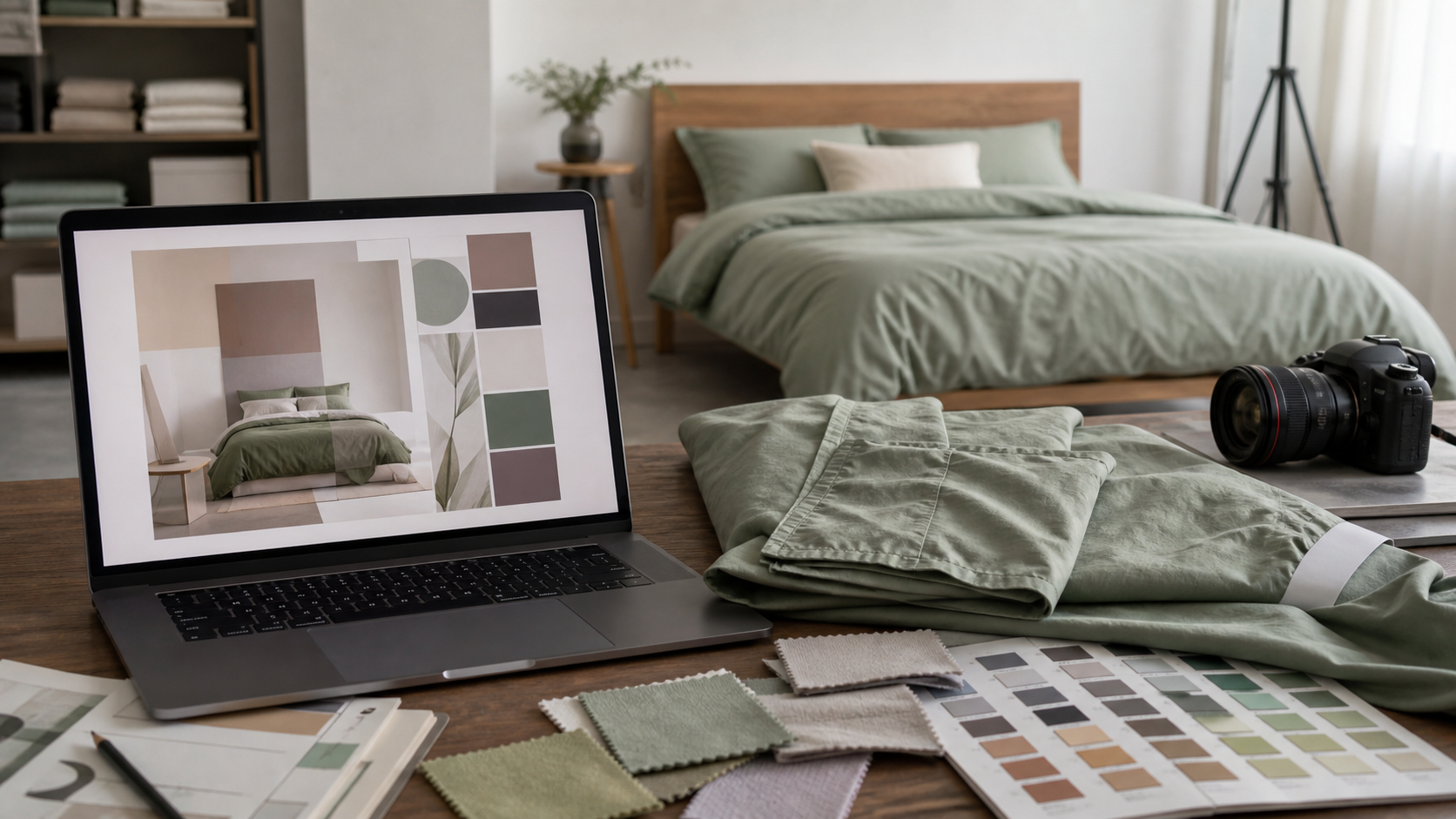
AI scenes can help a buyer and studio explore mood before samples arrive. When an image represents a specific product for sale, photographs of that sample provide a clearer basis for checking its appearance and construction.
Both approaches can belong in one project. Identify which images are concepts and which document the product, and agree separate acceptance criteria. A finished-looking concept is not evidence of a client shoot.
Choose the method around the image's purpose
Images used to identify a product, show its color, list components or explain construction should remain traceable to the actual sample and approved product information. AI concepts can help explore a mood or composition for internal planning.
One page may contain both types. Make their roles clear so a buyer can distinguish a product photograph from a proposed setting.
Use AI concepts to explore ideas
AI can vary room settings, palettes, light and composition quickly. It can also alter patterns, edges, seams, component counts or the geometry of the scene.
For a specific product, compare every visible feature with the sample information. Remove, redo or clearly label imagery whose product accuracy cannot be confirmed.
Check the boundary between the product and its proposed surroundings before judging the overall mood. A generated throw across a pillow, a new bed edge over a duvet seam or an altered contact shadow may obscure or reshape the real item. Ask which pixels must stay tied to the approved product source and which surrounding areas may change. Where the boundary cannot be kept credible, use another composition, controlled compositing or real capture; do not approve the image solely because the room looks convincing. Keep the chosen treatment and its disclosure attached to the final file so the publishing team can distinguish a concept from a product-representative image.
- Pattern matches the sample
- Correct component count
- Accurate edges and seams
- Color has not shifted
- Plausible scene geometry
- Clear image disclosure
Photograph the sample to create a reference record
A sample-based shoot can record the same item's full view, details, components and natural drape. Lighting, display conditions and retouching still need control; a photograph is not automatically an exact color reference.
The buyer or brand must confirm material, filling, dimensions and performance claims. Images show appearance and construction but cannot independently prove every specification.
Agree image labels, permissions and review criteria
Separate concept proposals, sample photography, composites and final publication files in the brief. A publicly displayed concept should not appear to document a real client product or the studio premises.
Check the permitted uses of source material, model images and third-party assets against the project agreement and destination channel. This is a planning framework, not a determination of legal rights.
Put this guide into a production plan
Confirm the actual scope from your samples, channels and accuracy requirements; these services are not automatically bundled.
Sources and further reading
These sources provide context for the claims or channel requirements discussed here. Review current requirements alongside your product information and project agreement.
- MIIT: E-Commerce Law of the People's Republic of China ↗China-market context: Article 17 addresses accurate product and service disclosure and misleading commercial publicity. Review the source for its scope.
- SAMR: Advertising Law of the People's Republic of China ↗China-market context: Articles 8 and 28 address product descriptions and misleading advertising. Destination markets may have different requirements.