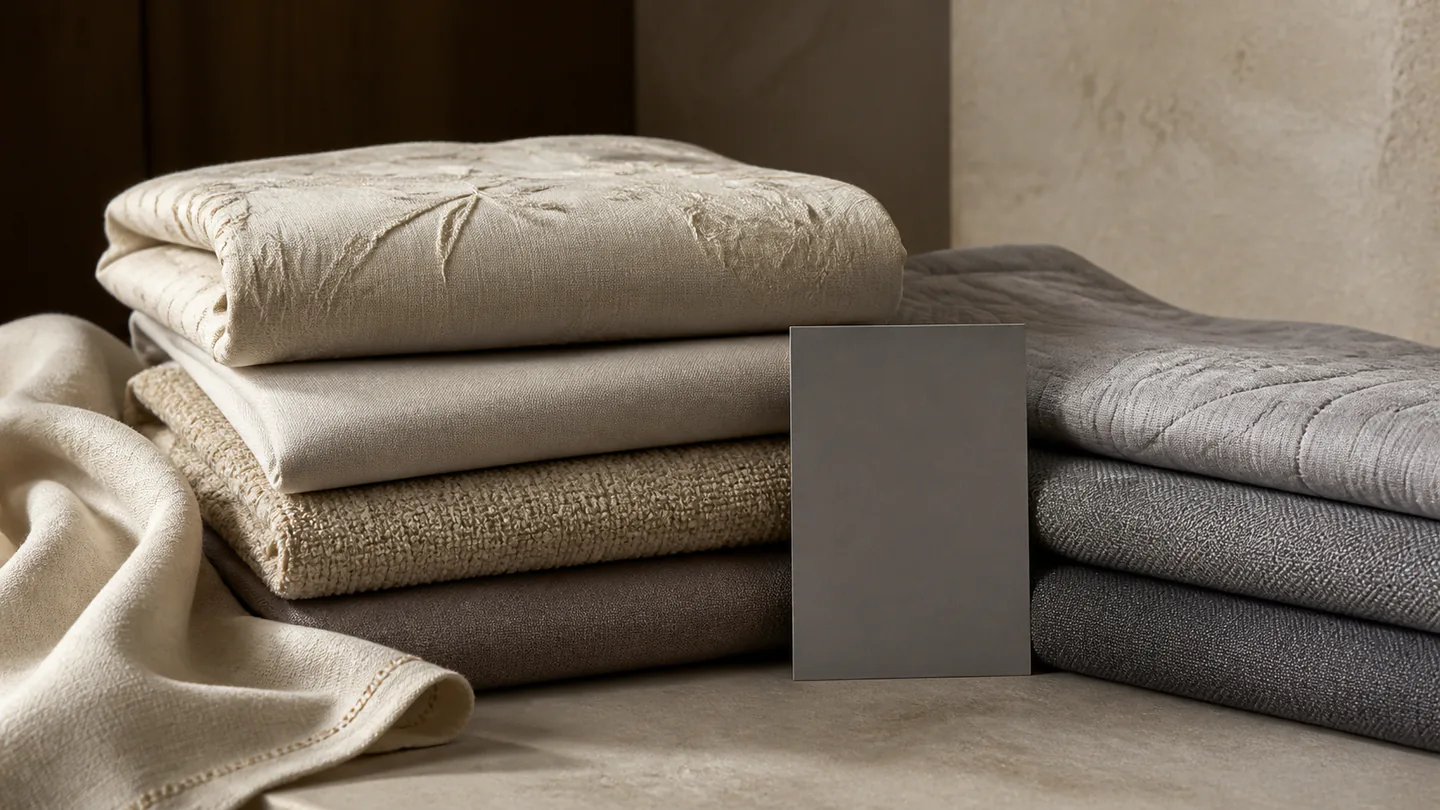
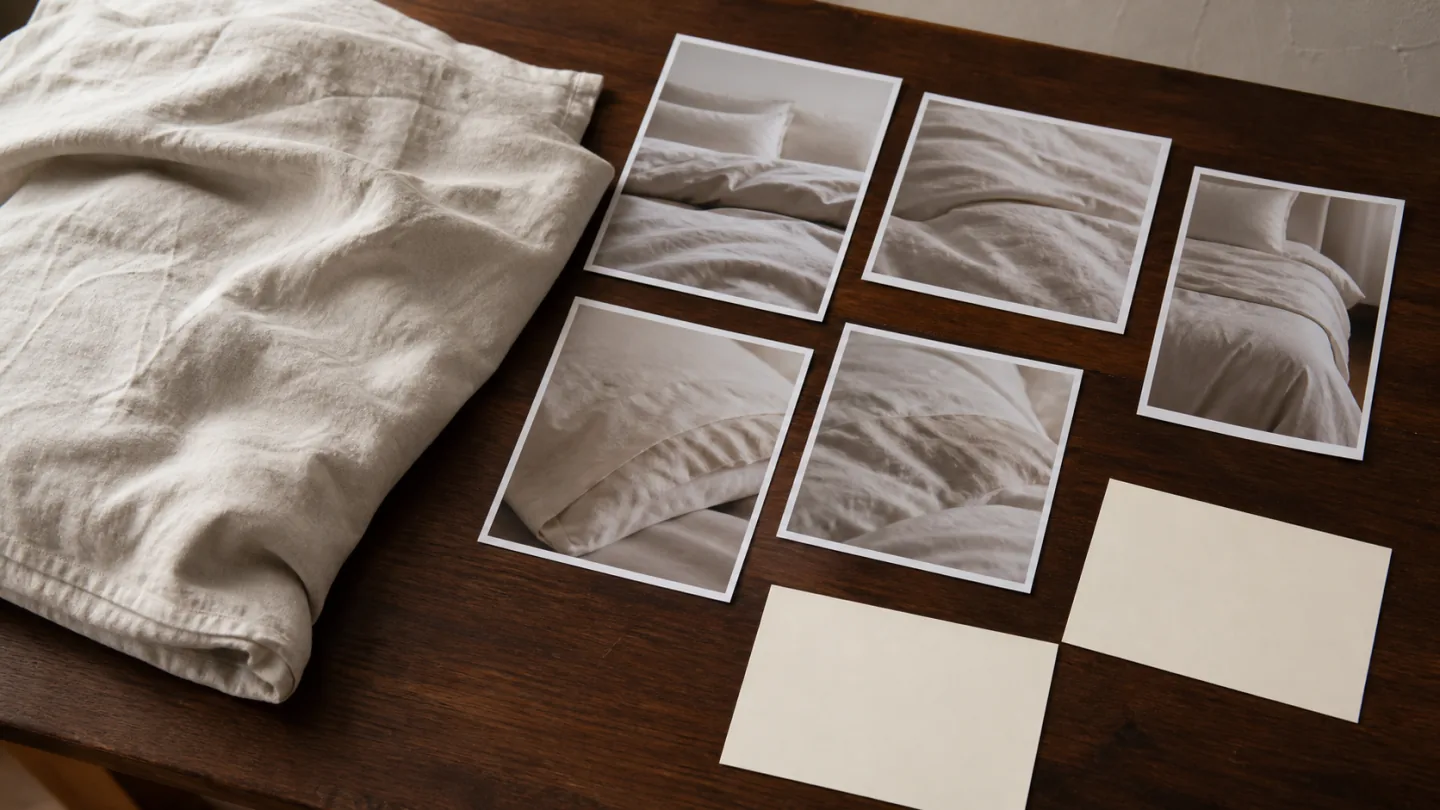
A useful test answers four questions: is the product arranged correctly, are color and pattern clear, does the setting support the subject, and can this setup deliver the planned images?
Tie the decision to a style code, image file and specific changes. Responses such as looks fine, make it more premium or something feels wrong give the team too little information to act on.
Verify the product before discussing the composition
Match the test image to the sample list: code, color, duvet-cover and pillowcase combination, front and reverse, openings and required components. Do not develop a composition around the wrong product state.
Record creases, stains, loose threads, missing pieces and arranging issues. Distinguish what can be prepared on set from what needs a replacement sample or a brand decision.
Check color, pattern and background separation
Compare the physical sample, review image and intended display size. Pale edges should remain visible, dark areas should retain useful detail and patterns should still read when the image is reduced.
Display devices, room light and post-production affect color judgment. A test can establish a direction; it cannot guarantee an identical result on every screen and in print.
- A clear product outline
- Pattern separated from the background
- Texture retained in highlights
- Useful detail in dark areas
- Sample and reference records complete
Review arranging, props and crop space
For a set, check component relationships and pattern scale; for a duvet, check form and natural volume; for an insert, check profile and edges. Props must not hide required construction or dominate the thumbnail.
If the image must work as a landscape, portrait, listing or product-page asset, test the crops and text positions now. Do not wait until delivery to discover that the necessary space was never captured.
Turn feedback into a specific change
Identify the subject, location and desired result. Reduce the props on the right so the pillowcase pattern is visible gives a usable instruction. Consolidate several reviewers’ comments into one version.
Retain the approved test, changes and the products to which the approval applies. Recheck the baseline when the style or setting changes to reduce differences between batches.
Put this guide into a production plan
Confirm the actual scope from your samples, channels and accuracy requirements; these services are not automatically bundled.
Sources and further reading
These sources provide context for the claims or channel requirements discussed here. Review current requirements alongside your product information and project agreement.
- MIIT: E-Commerce Law of the People’s Republic of China ↗Chinese official reference on accurate product information. Test-shot checks can identify differences in color, pattern, components or structure before publication; they are not a platform-approval guarantee.