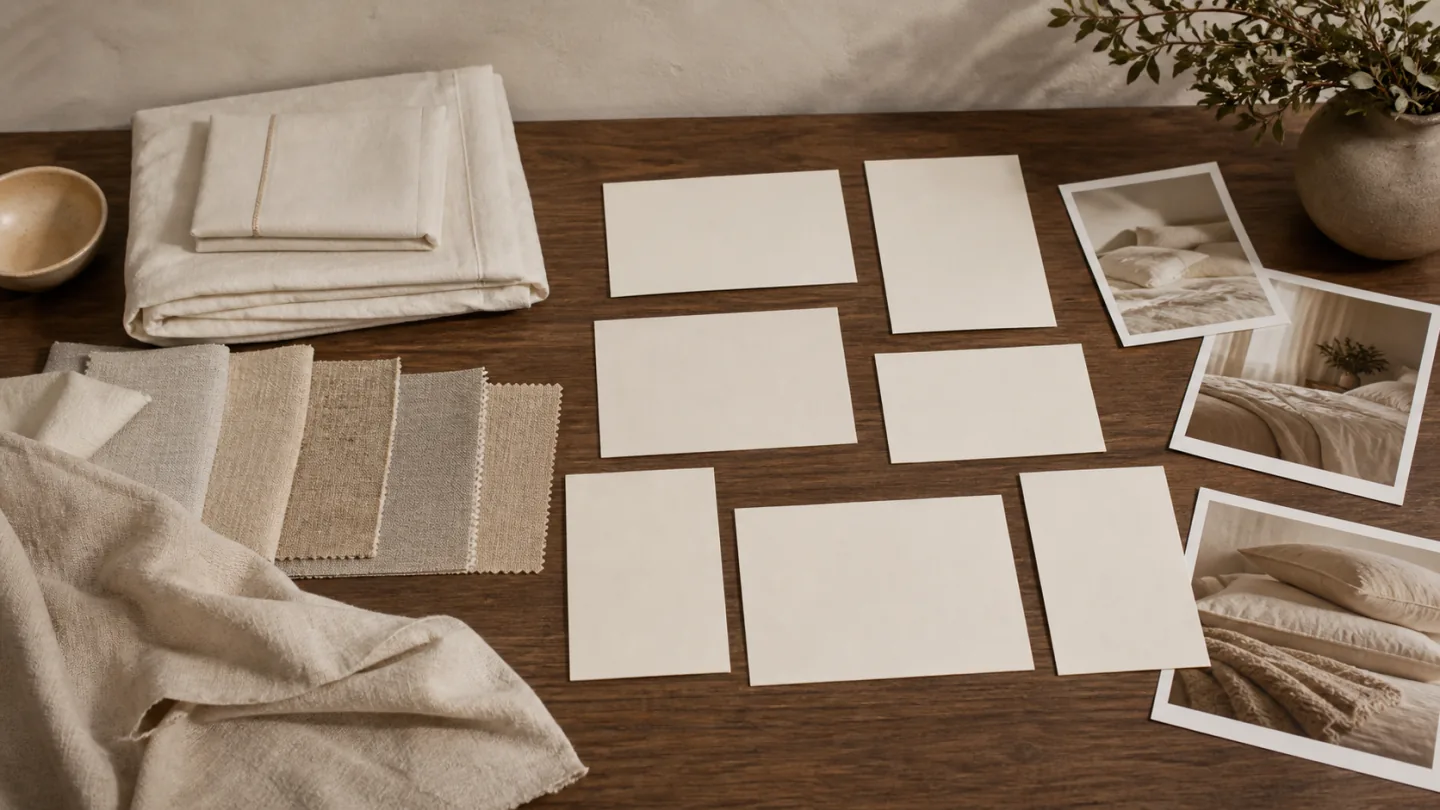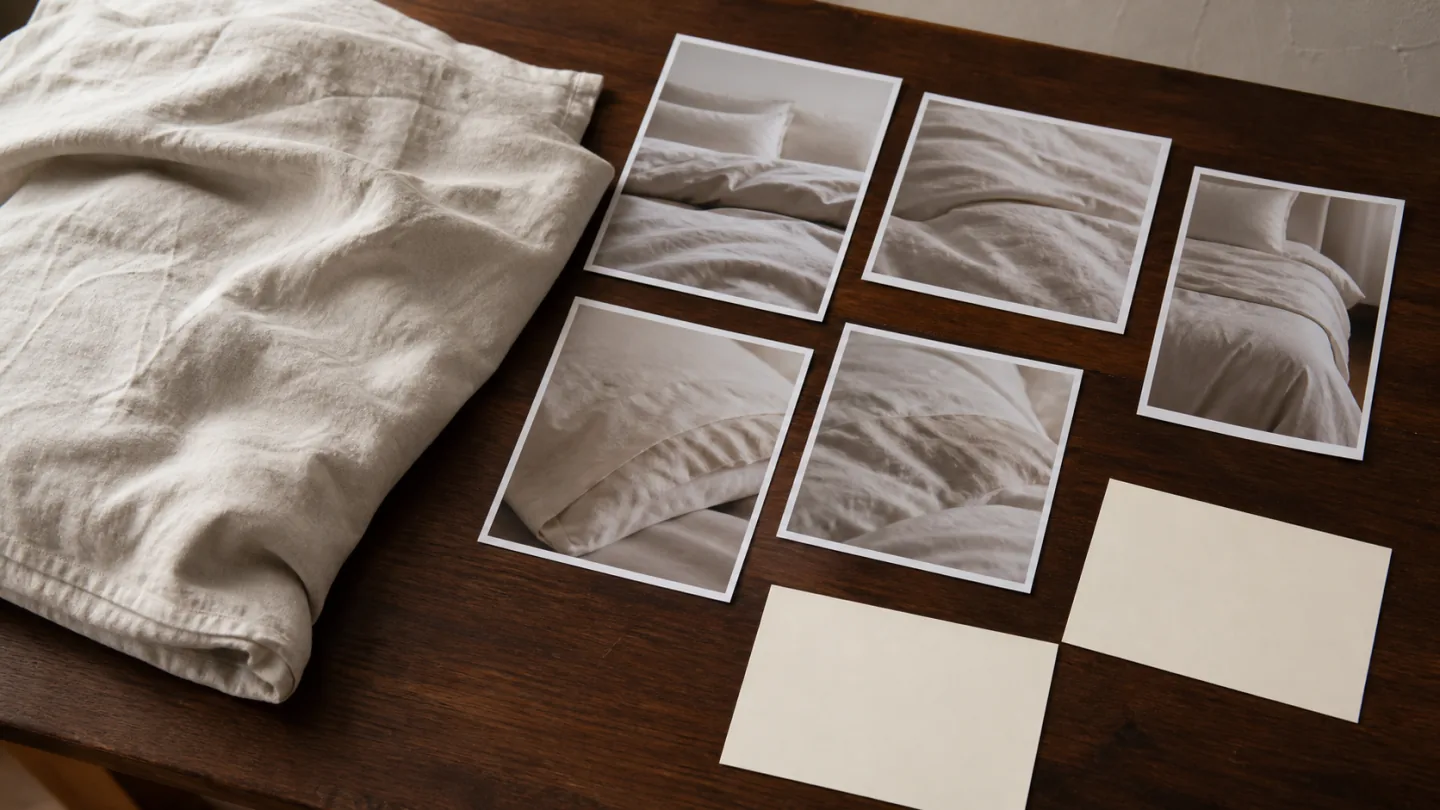
Separate fixed and variable conditions before a multi-SKU shoot. Bed type, camera position, light direction, background and naming rules can share a baseline; color, pattern, fabric and component differences need individual test checks.
Consistency does not mean turning every product into the same image. Large prints, pale duvets and dark bedding may need different exposure, backgrounds or arranging. Keep the evaluation standard stable while allowing necessary adjustments.
Group products using an inventory
Record style codes, colors, components, fabric, priorities and channels. Products sharing a bed type, composition task and page position may form a useful shooting group, reducing repeated setup changes.
Flag substantially different patterns, fabrics and components in advance. Forcing them into one group can reveal problems only on set, such as a pattern disappearing into the background or pale edges losing definition.
- Style codes and colors
- Exact set contents
- Bed type and dimensions
- Product priorities
- Shared image tasks
- Product-specific details
Establish a bed, camera, light and background baseline
Collection full views often benefit from a stable bed position, camera height, focal length, subject scale and light direction. Keep reference frames and position records before changing products so drift is visible.
A baseline does not replace test shots. Dark and light colors, reflective surfaces and pattern density may call for exposure, fill-light, styling or prop adjustments that preserve the relationship across the series.
Manage changeovers and filenames together
Sequence the shoot by setting, bed type, color or priority, but use the same style codes on sample labels, capture notes and filenames. At each changeover, check components and required views before moving on.
Record which assets can actually be reused. A construction detail or color-specific image should not be copied across the collection merely because the products share a series name.
If one style is delayed or its facts change, distinguish that SKU's held assets from the rest of the collection. For a coordinated stills, PDP and video handoff, list which outputs depend on that sample and which approved outputs can remain independent. A collection hero containing the unresolved item may also need to stay on hold even when individual product images are ready. Let the brand choose whether to release an accurate partial range, wait for the missing sample or commission replacement coverage. Record that choice before rearranging the production order; a shared setting does not make every file ready at the same time.
- Sample labels match the inventory
- A baseline check follows each changeover
- Filenames identify style and color
- Exclusive details are clearly marked
- Additional shots are added to the current list
Review the collection side by side
Compare subject scale, bed position, background, tonal relationships, pattern clarity and page rhythm across the group. An image that looks complete by itself may sit awkwardly beside the rest of the collection.
Where a truthful representation requires a departure from the baseline, keep the reason and version record. The aim is easy comparison without sacrificing each product’s real color and construction.
Put this guide into a production plan
Confirm the actual scope from your samples, channels and accuracy requirements; these services are not automatically bundled.
Sources and further reading
These sources provide context for the claims or channel requirements discussed here. Review current requirements alongside your product information and project agreement.
- MIIT: E-Commerce Law of the People’s Republic of China ↗Chinese official product-information reference. Shared collection assets should not conceal differences in styles, colors or components. Confirm the applicable requirements for the sales market.